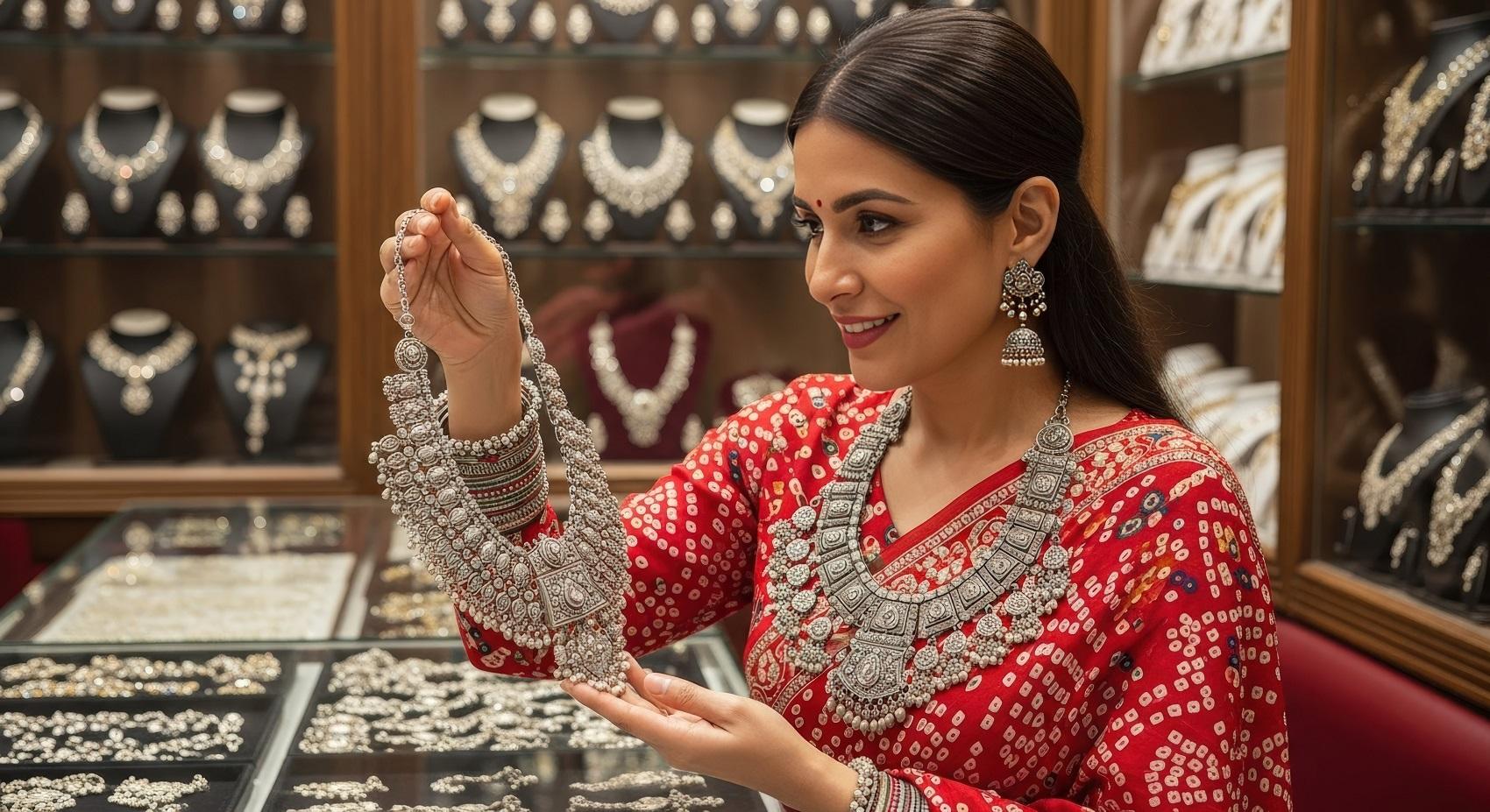
For decades, silver sat quietly in Indian jewellery boxes — the poor cousin to gold’s investment appeal and diamonds’ aspirational sparkle. But in 2025, the metal once considered ‘everyday’ has transfigured into the new gold: fashionable, collectible, artisanal and increasingly sought after by both the value-conscious and the style-driven. Across metros, silver jewellery is experiencing a renaissance — fuelled by global design trends, rising gold prices, India’s love for handcrafted pieces and a new generation that values individuality over inheritance.
Rajiv Arora, co-founder, Amrapali, says silver today sits comfortably between heritage and modern wearability. “At Amrapali, silver jewellery is about blending traditional Indian craft with what people want to wear now,” he says. “Tribal chokers, bold earrings, and stackable bangles and rings are among our most popular pieces. Motifs like peacocks, lotuses and simple tribal patterns remain evergreen because they feel timeless. Oxidised silver is a big favourite for the way it highlights intricate detailing and creates a vintage, handcrafted feel, while bright, white-polished silver appeals to those who want a cleaner aesthetic. Gold-plated silver is also in strong demand during festivals and weddings — it offers the look of gold at a far friendlier price. Overall, customers want silver they can wear every day, but also dress up for special occasions.”
What’s driving the silver surge?
Gold prices have touched historic highs, nudging many buyers — especially millennials and Gen Z — towards precious-yet-accessible silver. A pair of handcrafted sterling-silver jhumkas costs only a fraction of its gold equivalent, yet still offers craftsmanship, longevity and strong design value. Ten grams (known as a ‘tola’ in the trade) of 24-carat gold costs around Rs 13,058 while 10 gm of silver is around Rs 1,880 in Delhi.
Retailers say silver now occupies a unique space between fashion jewellery and fine jewellery: durable enough to last, versatile enough for everyday styling and affordable enough for impulse buying.
“I even have brides choosing silver for their big day, and they’re wearing exquisite sets within Rs 1 lakh,” says Neeta Boochra, chairperson, Neeta Boochra Jewellery and Luxe Radiant LLP. “Many tell their mothers they’d rather buy 10 different silver sets than a single gold set. Silver is the new gold. Chandbalis are trending, as is fusion work with elephant motifs and stones. Prices range from Rs 3,000 to Rs 1 lakh, and the oxidised look continues to see strong demand — including from customers in the US, Australia and Singapore.”
How are designers and brands reinventing silver jewellery?
For jewellers and designers, silver allows for a level of scale and experimentation that gold rarely permits. Manufacturers say they can play with scale, texture and heritage motifs without the constraints of price. Designers say the metal responds beautifully to texturing, oxidation, engraving and stone-setting — making it ideal for both artisanal craft and contemporary, fashion-forward design. This creative flexibility has also accelerated the rise of branded silver jewellery.
Divya Gupta, founder of Aliame and a trained jewellery professional with a decade of manufacturing experience, says silver offers creative freedom but demands skill. “Silver is softer than gold, so achieving fine detailing and a high-quality finish is actually tougher,” she explains. “Most highly skilled craftsmen work with gold, which is why mass-market silver tends to be chunky. But because silver is affordable and flexible, designers can experiment far more — multiple iterations, intricate textures, new motifs — without worrying about wastage costs that make gold designs more standardised.” She adds that silver is also hypoallergenic and increasingly inspiring fresh design directions. “Along with nature and geometry, I’m bringing in themes like science and astronomy, which today’s urban woman connects with.”
A category once dominated by local jewellers, silver is now seeing national players offering certification, design consistency and stronger after-sales assurance. Brands like Shaya by CaratLane, Tribe by Amrapali, Tanishq’s Mia Silver, Isharya, Kushal’s, Pipa Bella, Zariin, Jaypore and Melorra have made silver cool, contemporary and gift-worthy. In the process, they’ve taken the metal from the street market to the premium boutique, positioning it as a stylish and credible alternative to gold.
Manu Gupta, vice-president and brand head at Jaypore, says the demand for sterling silver has risen sharply across both traditional and contemporary designs. Jaypore offers an extensive range of 92.5 per cent pure silver jewellery crafted to reflect India’s artisanal heritage while fitting seamlessly into modern wardrobes. Prices start at around Rs 990 and go up to Rs 50,000, with the brand retaining many earlier price points despite higher raw material costs — allowing customers to save up to 40 per cent on current silver rates.
Gupta adds that there is renewed interest in vintage-inspired pieces, with Jaypore reintroducing crafts such as Thewa and Bidri in updated, modern interpretations. As silver prices rise, he notes a shift towards lighter, versatile pieces — delicate designs that are easy to stack, style and wear every day, without compromising on the handcrafted aesthetic.
Why does silver fit today’s ‘everyday luxury’ mindset?
Silver mirrors the mood of the modern Indian consumer. It fits effortlessly into minimalist workwear, Zoom-friendly statement pieces, destination weddings, mix-and-match wardrobes and even the shift towards sustainable buying. For millennials and Gen Z, the appeal is simple: silver is both wardrobe-friendly and wallet-friendly.
“Today’s young buyers don’t want to save jewellery for special occasions — they want pieces they can actually live in,” says a leading retailer. “Silver lets them look polished every day without the pressure of locking it away.” The metal aligns perfectly with this new, everyday-luxury mindset.
How is silver changing men’s jewellery choices?
A quiet revolution is unfolding among male shoppers. Men are now buying more silver chains, bands, cuffs, rings and pendants than ever before — fuelled by celebrity styling, OTT characters and global fashion influences. Jewellers report a 20–35 per cent rise in men purchasing silver jewellery over the past year, with younger buyers driving the shift.
“I admire silver because it strikes the perfect balance between subtlety and style,” says Vishesh Sharma, head of marketing for Aadyam at the Aditya Birla Group. “It feels premium without being flashy, and I can wear it both to work and on weekends.” Retailers say this rise signals a broader cultural reset: men are embracing jewellery as an extension of personal expression rather than a rare occasion-wear accessory.
How to choose good silver jewellery?
Experts say buyers should look closely at both purity and craftsmanship when selecting silver. Amrapali’s Arora advises starting with the basics: “Good-quality silver is usually 92.5 per cent pure, also called sterling silver. Look for the ‘92.5’ stamp on the piece — it’s the quickest way to know you’re getting genuine silver.”
He adds that workmanship is equally critical. “Check the finishing, the smoothness of edges, how securely stones are set, and whether any detailing like engraving, filigree or textures looks clean and well-made. Good silver should feel sturdy, not flimsy.” Arora recommends buying from trusted brands or stores that provide authenticity certificates or a guarantee of purity. “In short: look for the 92.5 mark, examine the workmanship closely and choose a reliable seller,” he sums up.
While silver is still affordable, it is no longer ‘cheap’. Artisanal silver jewellery — especially handcrafted pieces from Jaipur, Rajasthan, and tribal belts — is commanding higher prices due to labour, design and export demand. Average price brackets in the silver market now span a wide range, making the category accessible yet aspirational. With prices rising steadily, silver is increasingly being viewed as a serious gifting category for weddings, anniversaries and festivals, offering both beauty and long-term value.
Retailers predict that in the next two to three years, silver may outpace gold in terms of volume growth (though not value). Many stores have doubled their silver counters and expanded collections by 30–50 per cent this season. Some innovations include anti-tarnish finishes, lightweight office-wear lines, designer collaborations, limited-edition artisanal drops and customisation services for Gen Z buyers.
India’s silver jewellery boom is not a fad: it’s the outcome of economic shifts, aesthetic preferences and evolving consumer behaviour. Silver today offers design, durability, affordability, authenticity and emotional expression; in short, everything that buyers typically want.
GOLD vs SILVER (2025)
(Prices are approximate market averages; varies by design and workmanship)
| Category | Gold Jewellery (22k/18k, in Rs) | Silver Jewellery (92.5 Sterling, in Rs) |
|---|---|---|
| Everyday Earrings | 10,000 – 45,000 | 1,200 – 4,000 |
| Festive Jhumkas | 25,000 –1,20,000 | 4,000 – 15,000 |
| Statement Neckpieces/ Chokers | 60,000 –3,50,000 | 6,000 – 25,000 |
| Designer/Artisanal Sets | 1.5 – 5 lakh | 20,000 – 75,000 |
| Temple Jewellery | 2 – 10 lakh | 1 – 3 lakh |
| Cocktail Rings | 15,000 –1 lakh | 1,500 – 12,000 |
| Men’s Chains/Bracelets | 35,000 – 2 lakh | 2,000 –15,000 |
| Wedding Gift Sets | 1 – 5 lakh | 8,000 –60,000 |