A farm-to-fork approach, home cooks and kitchen-garden ingredients are quietly reshaping how travellers eat in Goa’s villa stays.
Goa’s villa culture has moved beyond infinity pools and Instagram-driven aesthetics. Increasingly, travellers—especially families and long-stay guests—are seeking food that feels rooted, light and familiar. At several Vianaar properties, this shift is evident in menus that favour home-style, ingredient-led dishes over heavy restaurant fare.
Television actor Nakuul Mehta and his wife Jankee Mehta, frequent visitors of their second home at Vianaar properties in Goa, describe the appeal as a “sense of a private sanctuary set in nature.” On a recent stay, the couple opted for a home cook arranged by the villa. “Our Home Chef Kavita’s food reminded us of meals we often miss while travelling—simple, flavourful and cooked with care. It made the experience feel personal.”
The idea of choosing “home food” during a holiday may seem unexpected, but for many guests it has become synonymous with comfort. Requests are shifting towards fresher, lighter meals—pasta with homegrown basil and cherry tomatoes instead of rich white sauces, or ghar ki moong dal in place of cream-heavy dal makhni. Travellers say these meals help anchor long stays, especially for families.
Varun Nagpal, Founder and CEO of Vianaar, says the culinary model has evolved in response to these preferences. “We send different kinds of cooks depending on what guests want—some prefer simple, home-style food; others want Goan dishes prepared the way locals make them,” he says.
Home cooks cost between Rs 3,000 and Rs 4,000 a day for full meals. For guests seeking multi-cuisine menus or plated dining, the villas can arrange professional chefs who charge Rs 10,000 to Rs 15,000 per day.
Nagpal adds that the experience begins well before the food arrives at the table—in the villas’ design, the use of local materials and the gardens that supply herbs and produce.
A Garden-Led Food System
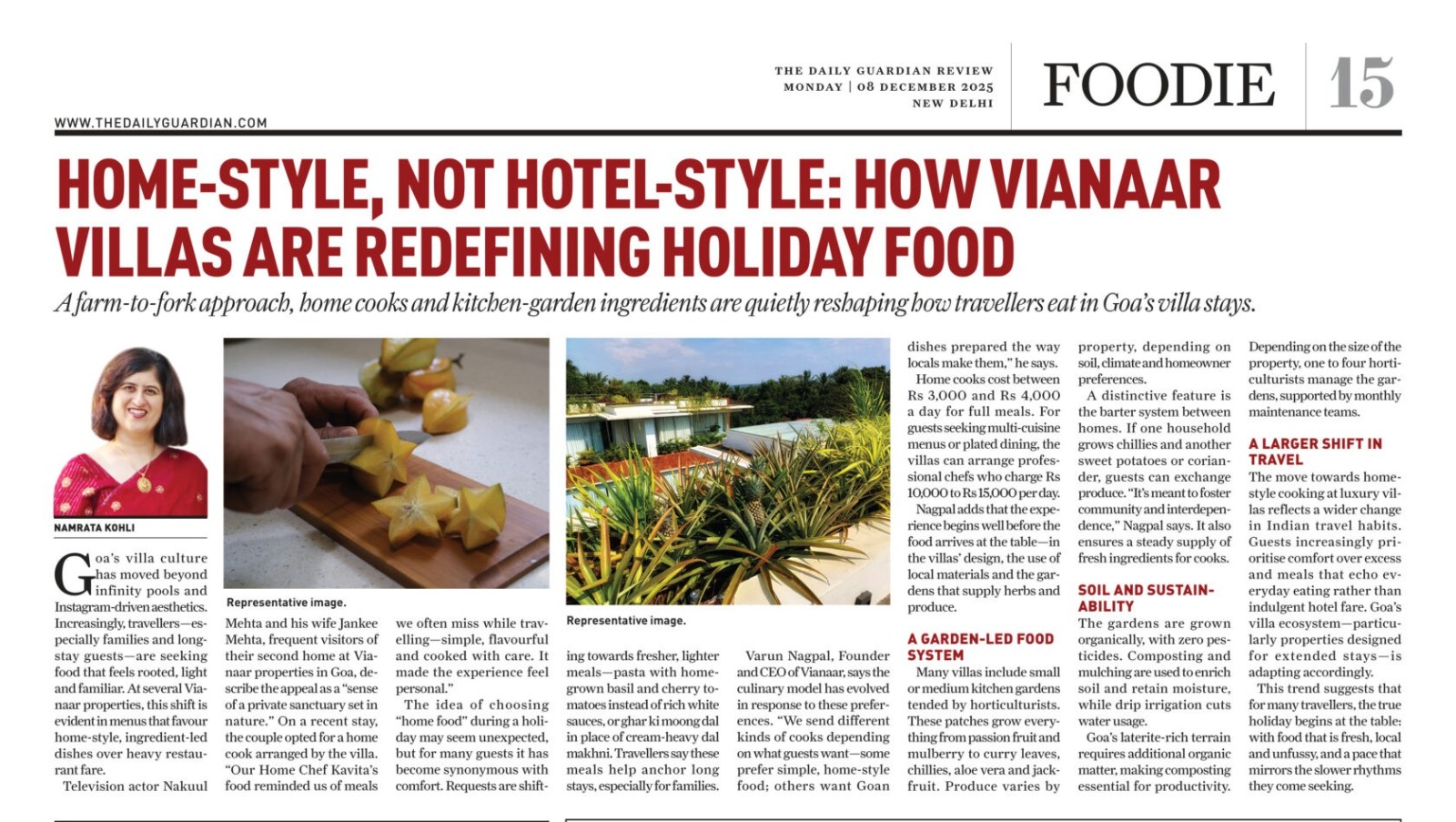
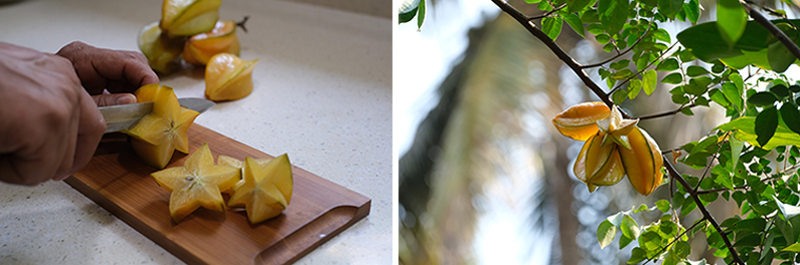
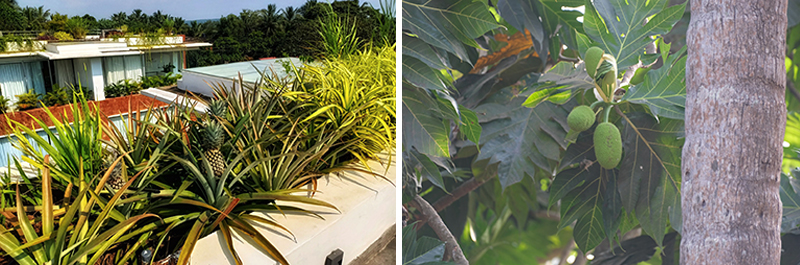
Many villas include small or medium kitchen gardens tended by horticulturists. These patches grow everything from passion fruit and mulberry to curry leaves, chillies, aloe vera and jackfruit. Produce varies by property, depending on soil, climate and homeowner preferences.
A distinctive feature is the barter system between homes. If one household grows chillies and another sweet potatoes or coriander, guests can exchange produce. “It’s meant to foster community and interdependence,” Nagpal says. It also ensures a steady supply of fresh ingredients for cooks.
Soil and Sustainability
The gardens are grown organically, with zero pesticides. Composting and mulching are used to enrich soil and retain moisture, while drip irrigation cuts water usage.
Goa’s laterite-rich terrain requires additional organic matter, making composting essential for productivity. Depending on the size of the property, one to four horticulturists manage the gardens, supported by monthly maintenance teams.
A Larger Shift in Travel
The move towards home-style cooking at luxury villas reflects a wider change in Indian travel habits. Guests increasingly prioritise comfort over excess and meals that echo everyday eating rather than indulgent hotel fare. Goa’s villa ecosystem—particularly properties designed for extended stays—is adapting accordingly.
This trend suggests that for many travellers, the true holiday begins at the table: with food that is fresh, local and unfussy, and a pace that mirrors the slower rhythms they come seeking.