As luxury thresholds climb, the real differentiator at Rs. 15 crore is no longer square footage — but privacy infrastructure, brand equity and managed living
Luxury in Indian real estate has quietly redrawn its price map. A few years ago, homes priced above Rs 1.5 crore were categorised as luxury. Today, that threshold has moved dramatically upward. According to Anuj Puri, Chairman, ANAROCK Group, the ultra-luxury segment now effectively begins at Rs 15 crore and scales significantly beyond. The shift is visible in market data. ANAROCK reports that luxury housing prices across major cities rose 40% between 2022 and 2025. NCR recorded a steep 72% rise, while MMR saw a 43% increase over the same period. What was once considered a high-ticket purchase is now the launch norm in prime micro-markets.
But this raises an important Spending question: If both Rs 5-crore and Rs 15-crore homes offer a carpet area of 3,000–5,000 sq ft, what exactly are buyers paying for at the higher end? The answer lies beyond square footage.
Beyond Size: The Experience Layer
“The difference between luxury homes worth Rs 15 crore and Rs 5 crore goes beyond size,” says Puri. “It has to do with curated experiences, brand equity, and ‘white-glove’ services.” Both types of homes have large 3,000–5,000+ sq ft layouts, but ultra-luxury homes cost 30–40% more because they come with 5-star hotel-like features like 24/7 concierge services, private chefs, temperature-controlled wine cellars, dedicated spas, and internationally certified concierge teams. Branded residences that have brand alignments with well-known hotel chains offer 8–9% annual rental yields, compared to 2.5–3.5% for regular luxury apartments. These homes come fully furnished and offer hotel-like comfort in private settings. The higher prices are justified by the innovative designs, custom options like private rooftop pools, and the ability to use five-star hotel services. These features make such high-grade lifestyle communities more than just places to live, he says.
Rs 16 crore is the average ticket size of the luxury homes sold in CY (Calendar Year) 2025 highlighting strong buyer appetite for ultra-premium homes, as per latest High-End Luxury Housing Report released by India Sotheby’s International Realty (ISIR) and CRE Matrix. The ultra-luxury segment accounted for a 24% market share in CY2025, in value terms. The departure in India’s super-luxury housing story is that it is no longer anchored solely to legacy addresses. “What is particularly notable is that this growth is no longer confined to traditional prime pockets,” says Tina Talwar, Area Director, India Sotheby’s International Realty. “Emerging micro-markets such as Dwarka Expressway, Golf Course Road and Golf Course Extension Road are driving structural expansion, supported by infrastructure upgrades, stronger product offerings and improved connectivity.” In other words, ultra-luxury is no longer just about established prestige. It is increasingly about infrastructure-led re-rating — where new corridors, backed by access and design differentiation, are creating fresh premium clusters.
Take the case of Belanova, the latest ultra-luxury offering by Central Park Estates on Gurugram’s Sohna Road, priced at approximately Rs 20 crore per residence. The project comprises just 124 homes within the larger 47-acre Central Park Resorts ecosystem. At this level, residences function as private vertical estates. Each home features expansive layouts, private lift lobbies with dual lifts, and limited residences per core — exclusivity rarely available at lower price points. Thirteen-foot floor-to-floor heights, wraparound balconies overlooking Central Greens, panoramic views and the flexibility to combine units allow for bespoke configurations. The lifestyle layer is equally curated: walk-in wardrobes in every bedroom, separate cooking and utility kitchens, private butlers, concierge services, medical-grade air purification, air ambulance tie-ups, and priority access to global experiences. “As we conceptualised Belanova, that ‘top-of-the-board’ philosophy guided our thinking,” says Ankush Kaul, President – Sales, Marketing & CRM, Central Park. “This is not just another luxury tower; it is designed for those who value craftsmanship, discretion and legacy — a residence that commands its place through substance rather than noise.”
Luxury By Invitation
Access is the biggest amenity. At Rs 15 crore and above, luxury is as much about access as it is about architecture. These residences are sold “by invitation” signalling that exclusivity — not scale — defines the proposition.
A defining feature is the seamless integration of bespoke hospitality into everyday living. Private aviation facilitation, helipad connectivity and global travel coordination are embedded within the offering — extending the home beyond its physical boundaries. At the core sits Club Belanova, a residents-only enclave conceived to rival global private members’ clubs. It combines fine dining, entertainment spaces, business lounges and immersive wellness infrastructure under one roof. Preventive health programmes, performance-driven fitness studios, advanced spa therapies and recreation facilities create a fully managed lifestyle environment.
Underlying it all is a pre-emptive hospitality framework. Highly trained service teams anticipate rather than respond to needs, while personalised concierge and lifestyle managers coordinate everything from international travel and event access to home management with discretion and efficiency.
The Rise of Invisible Luxury
In this bracket, value is defined less by visible opulence and more by invisible sophistication — privacy, precision and personalised living, says Amar Sarin, CEO & MD, TARC Ltd, which has launched Kailasa with select residences priced upwards of Rs 10 crore. “Luxury at the Rs 5-crore price point is largely determined by features, brand affiliations and prime location,” says Sarin. “However, at Rs 15 crore and above, the definition changes fundamentally. Rarity, scale and highly customised living become central. Buyers are investing in exclusivity.”
That exclusivity translates into lower-density developments, expansive layouts, private elevator access, enhanced security and discreet arrival experiences. “The real differentiator is lifestyle infrastructure and service,” he adds. “Concierge-led home management, curated event support, travel coordination and bespoke assistance are integral. The residence is expected to function with the efficiency of a luxury hotel while maintaining the privacy of a personal sanctuary.”
Design, too, evolves. “At the super-luxury level, the brief moves from premium to bespoke,” Sarin explains. Larger decks, fluid layouts, higher ceilings, natural light and unobstructed views become priorities. Buyers demand flexibility — private wellness suites, entertainment zones and customised material palettes are increasingly common.
Ultra-HNI buyers, globally exposed and hospitality-benchmarked, now favour aesthetics that are subtle and refined — warm yet minimalist, modern yet contextual. Walk-in wardrobes, seamless indoor-outdoor transitions and integrated smart systems are baseline expectations. Increasingly, homes are also expected to harmonise global design language with Indian sensibilities such as vastu alignment.
In this segment, it is all about understated elegance. Luxury is not loud. Quiet is the new grand and subtlety is status.
Homes as Heirlooms, Jewels in Concrete
Branded residences increasingly anchor India’s ultra-luxury segment. Robin Mangla, President, M3M India Group, observes that the category has evolved well beyond larger apartments and premium finishes. “At this level, buyers are seeking global brand associations, exclusivity, privacy and a thoughtfully curated lifestyle rather than just size,” he says.
Developments in collaboration with internationally recognised names such as Trump Tower, Jacob & Co. and ELIE SAAB are priced between Rs. 14 crore and Rs. 25 crore, depending on configuration and micro-market. Signature Residences by ELIE SAAB, for instance, are currently priced between Rs. 15.5 crore and Rs. 17 crore, with rates around Rs 37,000 per sq ft.
“These projects offer expansive layouts, private lift access, enhanced security and hospitality-inspired common spaces,” Mangla adds. “Limited inventory and strong brand pedigree are key drivers of long-term value. Increasingly, such residences are viewed as lifetime assets — much like heirloom jewellery — with enduring appeal across generations.”
Here the home shifts from being a lifestyle upgrade to a legacy asset — where brand equity, scarcity and service infrastructure combine to create value that extends beyond occupancy.
From Overt to Quiet Design
At the ultra-high-net-worth level, design has moved away from overt displays of luxury toward quieter, globally benchmarked sophistication. Limited inventory, bespoke detailing and a sense of esotericism increasingly define elevated living.
Says the spokesperson from Central Park- “Projects such as Belanova articulate this through a design philosophy that balances monumentality with intimacy — clean architectural lines, generous proportions, high-grade materials and seamless indoor-outdoor transitions. The emphasis is not on excess, but on scale executed with restraint.”
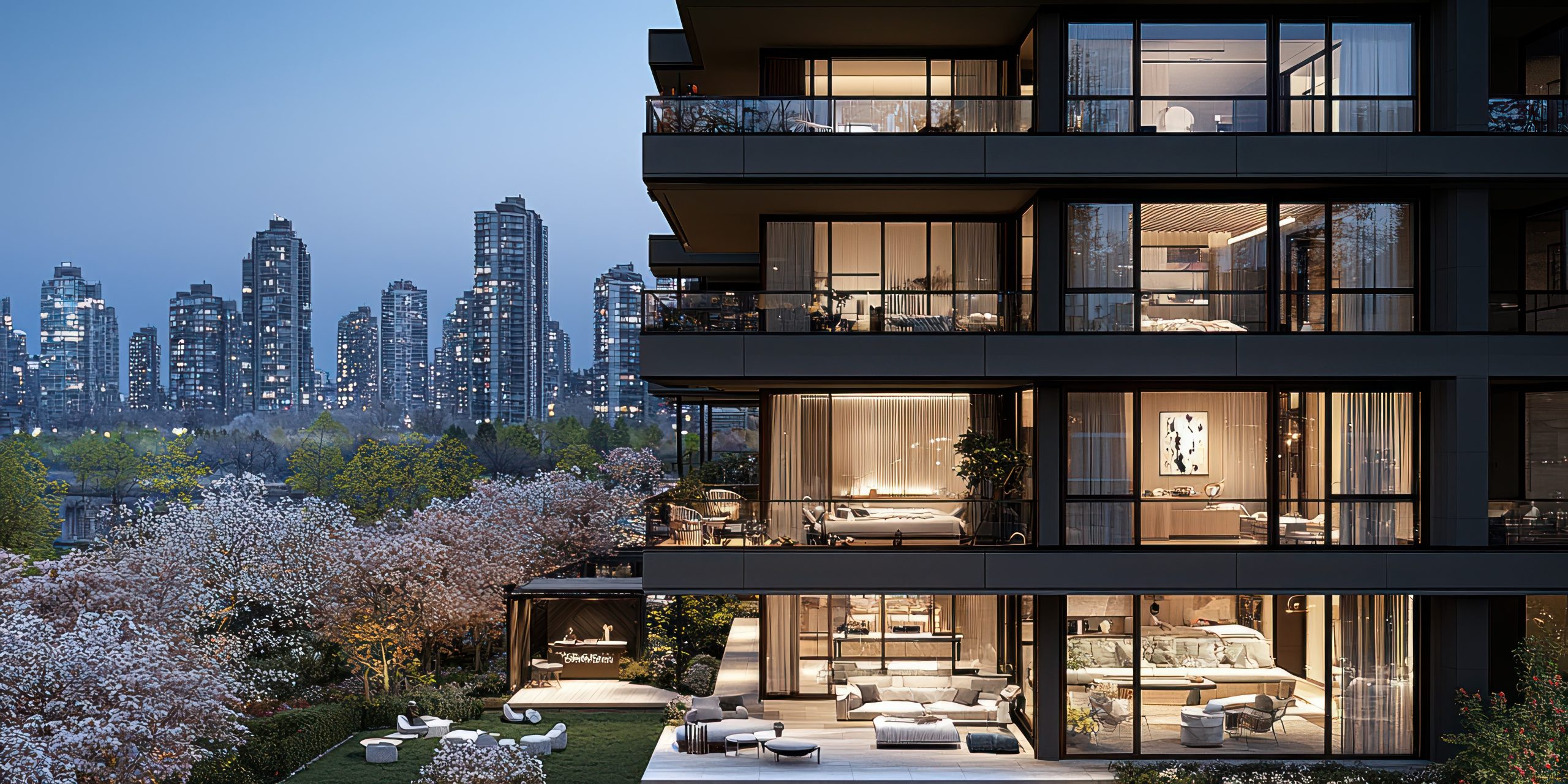
Spaces are curated to feel immersive yet timeless, with clearly defined formal and informal zones, private wellness suites and hotel-style dressing rooms and bathrooms. Privacy is engineered into the architecture itself — through private lift lobbies, controlled density and expansive, low-turnover floor plans.
Equally critical is the integration of hospitality. Concierge services are no longer peripheral amenities but structural components of the residential model, coordinating household management, travel, dining, wellness and entertainment. Specialised service teams operate on an anticipatory model, prioritising discretion and operational fluidity.
In this segment, luxury is defined less by visible embellishment and more by invisible efficiency — a design ecosystem that liberates time, enhances privacy and sustains tranquillity.
Ultra-Luxury Buyer Checklist
At Rs.15 crore and above, aspiration must give way to scrutiny.
Check the developer’s track record in delivering comparable projects. Evaluate whether concierge and hospitality services are contractually structured and financially sustainable. Assess density and privacy — private lift access, limited units per floor and controlled entry are critical.
In branded residences, clarify what the brand actually manages — operations or merely marketing. Examine the micro-market’s long-term defensibility, supported by infrastructure and sustained demand. Finally, consider exit liquidity — ultra-luxury can be less fluid than mid-market housing.
At this level, you are not buying a larger apartment. You are investing in an ecosystem — one that must endure beyond cycles, trends and launch premiums. In ultra-luxury, longevity is the real benchmark and value lies less in visible scale and more in invisible systems.