
At the newly renovated Aloha on the Ganges in Rishikesh, the river inspires not just the view but the food—from Uttarakhand’s gahat dal and Harsil rajma to Haridwar kachori and Banaras tamatar chaat
You hear the Ganga before you even see it. Enter Aloha on the Ganges, a four-acre resort in Rishikesh, and the gentle rush of water reaches you first. Then comes the view—the Ganga flowing past, framed by the Himalayan foothills. Come evening, it turns almost magical, as the sound of the river, the silhouette of the mountains and the flickering flames of the aarti come together in a spellbinding moment.
Here, the Ganga is not a distant postcard view but a constant presence—beyond balconies and dining tables, and woven into everything from morning yoga and evening aarti to what eventually arrives on your plate.
Aloha-Experiential
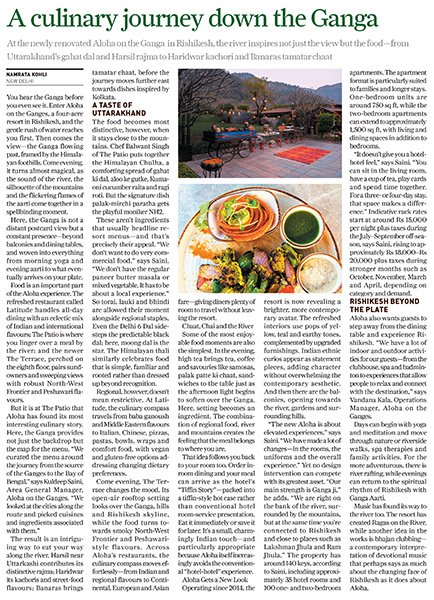
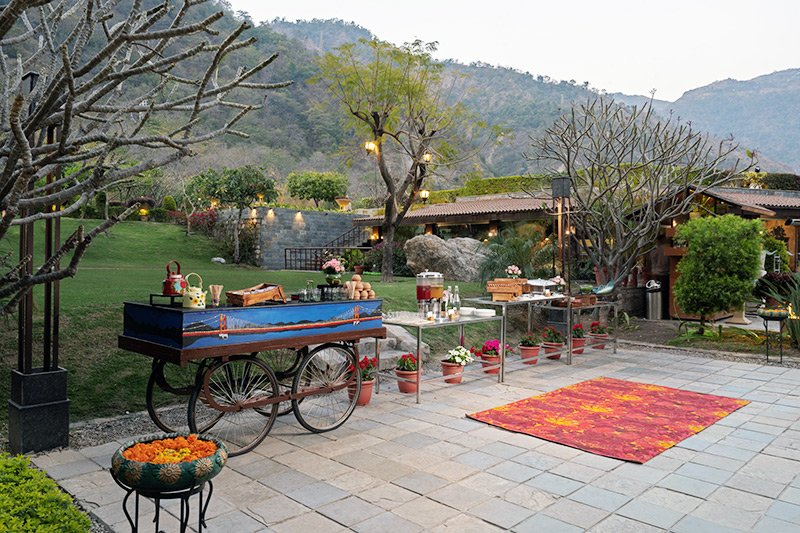
Food is an important part of the Aloha experience. The refreshed restaurant called Latitude handles all-day dining with an eclectic mix of Indian and international flavours; The Patio is where you linger over a meal by the river; and the newer The Terrace, perched on the eighth floor, pairs sundowners and sweeping views with robust North-West Frontier and Peshawari flavours.
But it is at The Patio that Aloha has found its most interesting culinary story. Here, the Ganga provides not just the backdrop but the map for the menu. “We curated the menu around the journey from the source of the Ganges to the Bay of Bengal,” says Kuldeep Saini, Area General Manager, Aloha on the Ganges. “We looked at the cities along the route and picked cuisines and ingredients associated with them.”
The result is an intriguing way to eat your way along the river. Harsil near Uttarkashi contributes its distinctive rajma; Haridwar its kachoris and street-food flavours; Banaras brings tamatar chaat, before the journey moves further east towards dishes inspired by Kolkata.
A Taste of Uttarakhand
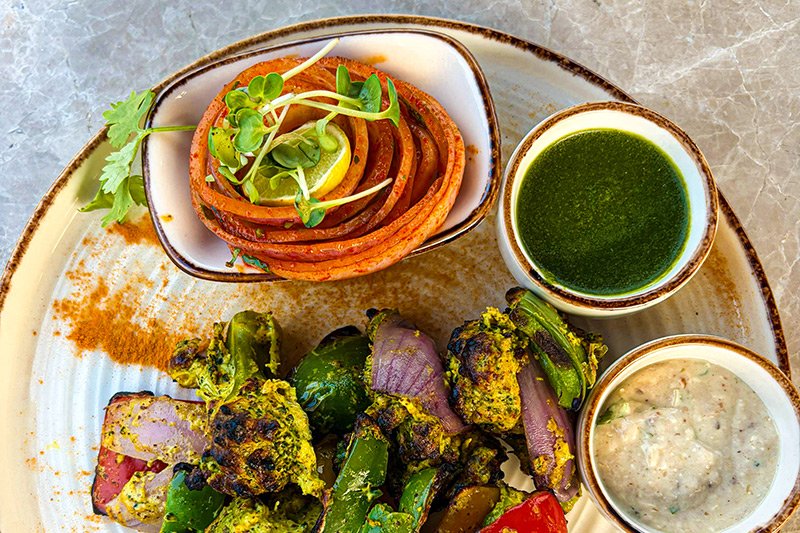
The food becomes most distinctive, however, when it stays close to the mountains. Chef Balwant Singh of The Patio puts together the Himalayan Chulha, a comforting spread of gahat ki dal, aloo ke gutke, Kumaoni cucumber raita and ragi roti. But the signature dish palak-mirchi paratha gets the playful moniker NH2.
Kasundi Brocoli
These aren’t ingredients that usually headline resort menus—and that’s precisely their appeal. “We don’t want to do very commercial food,” says Saini. “We don’t have the regular paneer butter masala or mixed vegetable. It has to be about a local experience.” So torai, lauki and bhindi are allowed their moment alongside regional staples. Even the Delhi 6 Dal sidesteps the predictable black dal; here, moong dal is the star. The Himalayan thali similarly celebrates food that is simple, familiar and rooted rather than dressed up beyond recognition.
Regional, however, doesn’t mean restrictive. At Latitude, the culinary compass travels from baba ganoush and Middle Eastern flavours to Italian, Chinese, pizzas, pastas, bowls, wraps and comfort food, with vegan and gluten-free options addressing changing dietary preferences.
Come evening, The Terrace changes the mood. Its open-air rooftop setting looks over the Ganga, hills and Rishikesh skyline, while the food turns towards smoky North-West Frontier and Peshawari-style flavours. Across Aloha’s restaurants, the culinary compass moves effortlessly—from Indian and regional flavours to Continental, European and Asian fare—giving diners plenty of room to travel without leaving the resort.
Chaat, Chai and the River
Some of the most enjoyable food moments are also the simplest. In the evening, high tea brings tea, coffee and savouries like samosas, palak patte ki chaat, sandwiches to the table just as the afternoon light begins to soften over the Ganga. Here, setting becomes an ingredient. The combination of regional food, river and mountains creates the feeling that the meal belongs to where you are.
The redesigned arrival lobby at Aloha On The Ganges Rishikesh
That idea follows you back to your room too. Order in-room dining and your meal can arrive as the hotel’s “Tiffin Story”—packed into a tiffin-style hot case rather than conventional hotel room-service presentation. Eat it immediately or save it for later. It’s a small, charmingly Indian touch—and particularly appropriate because Aloha itself increasingly avoids the conventional “hotel-hotel” experience.
Aloha Gets a New Look
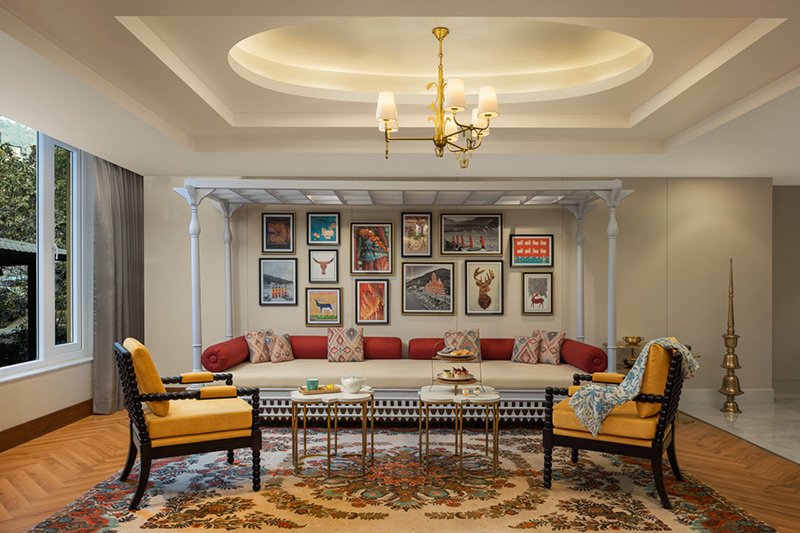
Operating since 2014, the resort is now revealing a brighter, more contemporary avatar. The refreshed interiors use pops of yellow, teal and earthy tones, complemented by upgraded furnishings. Indian ethnic curios appear as statement pieces, adding character without overwhelming the contemporary aesthetic. And then there are the balconies, opening towards the river, gardens and surrounding hills.
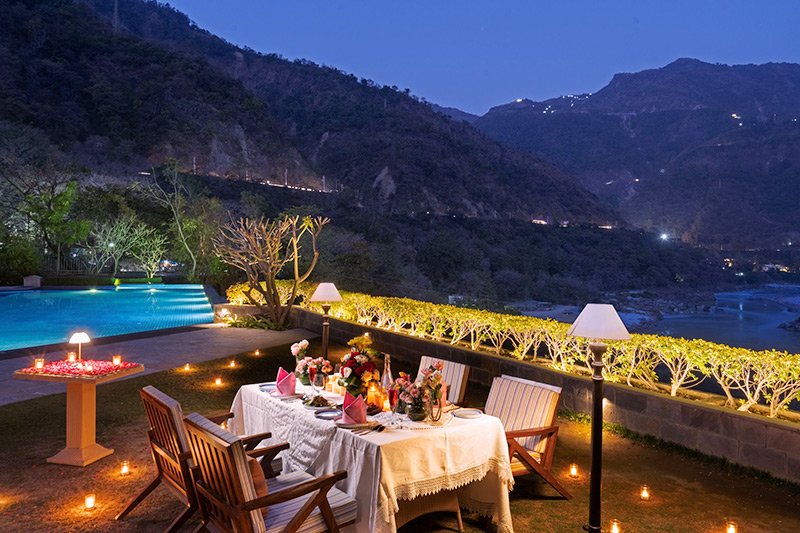
Aloha Experiential
“The new Aloha is about elevated experiences,” says Saini. “We have made a lot of changes—in the rooms, the uniforms and the overall experience.” Yet no design intervention can compete with its greatest asset. “Our main strength is Ganga ji,” he adds. “We are right on the bank of the river, surrounded by the mountains, but at the same time you’re connected to Rishikesh and close to places such as Lakshman Jhula and Ram Jhula.” The property has around 140 keys, according to Saini, including approximately 35 hotel rooms and 100 one- and two-bedroom apartments. The apartment format is particularly suited to families and longer stays. One-bedroom units are around 750 sq ft, while the two-bedroom apartments can extend to approximately 1,500 sq ft, with living and dining spaces in addition to bedrooms.
“It doesn’t give you a hotel-hotel feel,” says Saini. “You can sit in the living room, have a cup of tea, play cards and spend time together. For a three- or four-day stay, that space makes a difference.” Indicative rack rates start at around ₹15,000 per night plus taxes during the July–September off-season, says Saini, rising to approximately ₹18,000–₹20,000 plus taxes during stronger months such as October, November, March and April, depending on category and demand.
Rishikesh Beyond the Plate
Aloha also wants guests to step away from the dining table and experience Rishikesh. “We have a lot of indoor and outdoor activities for our guests—from the clubhouse, spa and badminton to experiences that allow people to relax and connect with the destination,” says Vandana Kala, Operations Manager, Aloha on the Ganges.
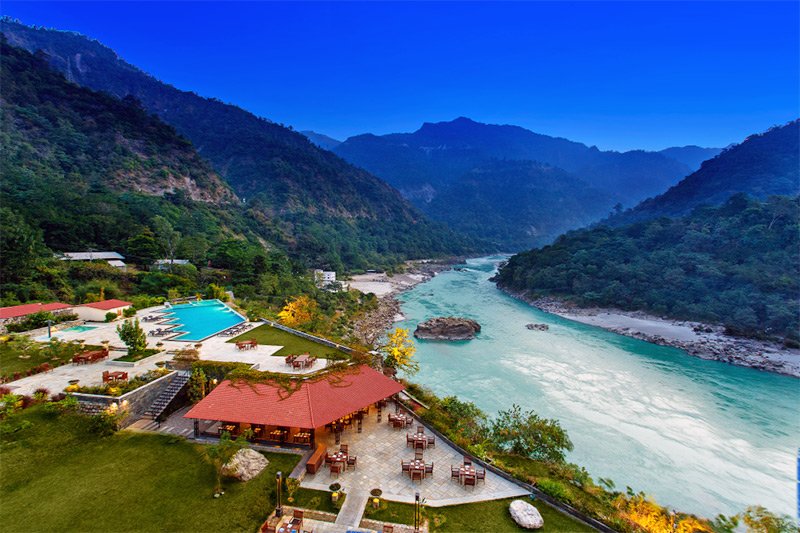
Aloha on the Ganges Rishikesh
Days can begin with yoga and meditation and move through nature or riverside walks, spa therapies and family activities. For the more adventurous, there is river rafting, while evenings can return to the spiritual rhythm of Rishikesh with Ganga Aarti.
Music has found its way to the river too. The resort has created Ragas on the River, while another idea in the works is bhajan clubbing—a contemporary interpretation of devotional music that perhaps says as much about the changing face of Rishikesh as it does about Aloha.
Rishikesh may be evolving, attracting families, wellness travellers and younger visitors, but Aloha keeps a strong sense of place. Its menus travel the world, yet its most memorable flavours remain rooted in the region.
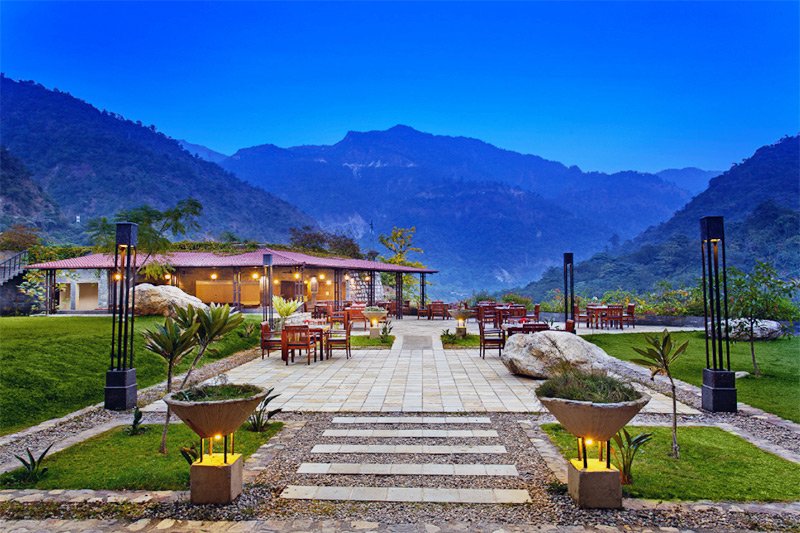
The Patio Aloha on the Ganges
For all its refreshed interiors and curated experiences, Aloha’s finest storytellers remain the Ganga outside—and the food on the table.