India’s branded residences market has acquired a couture name.
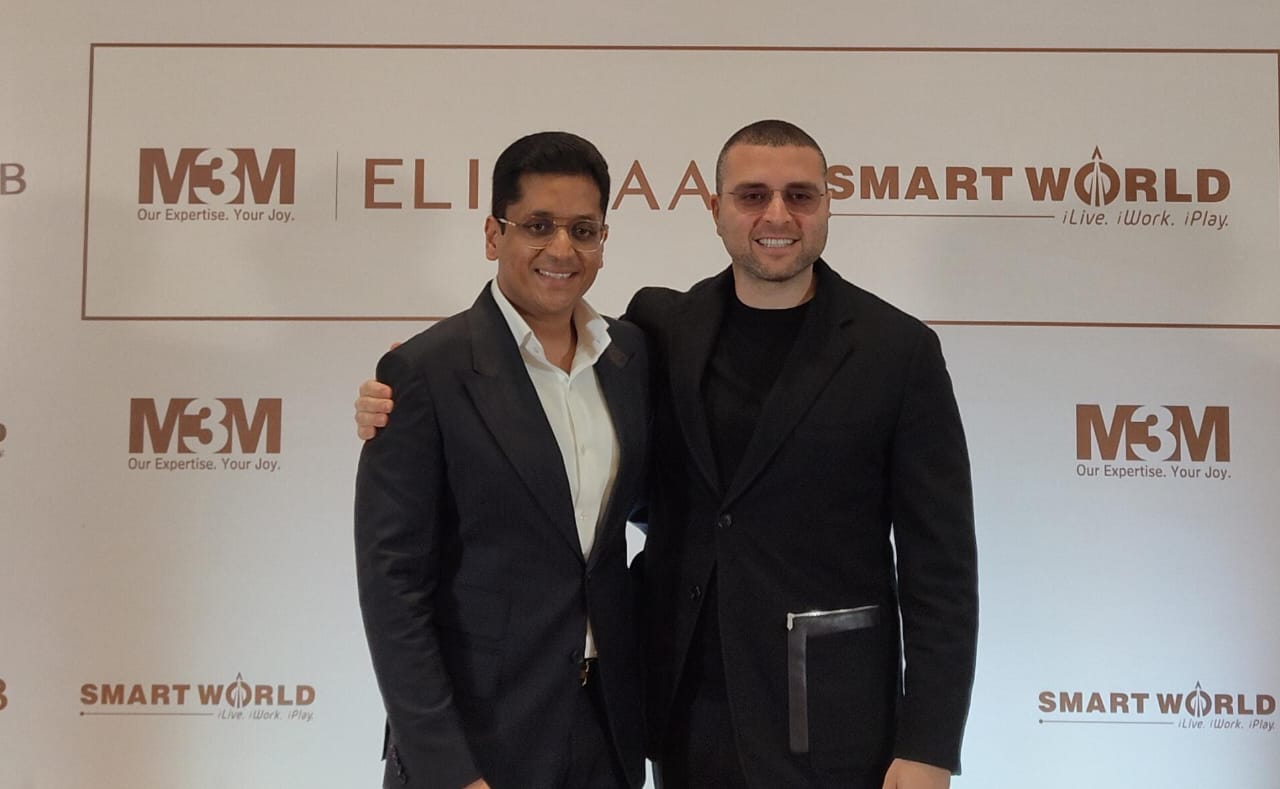
M3M India and Smartworld Developers have partnered with ELIE SAAB to launch Signature Residences by ELIE SAAB in Gurugram and Noida — marking the fashion house’s first residential developments in India. At first glance, it may seem like another global brand licensing its identity to Indian real estate. But the move signals something larger: India’s luxury housing market has matured into a strategic destination for global lifestyle brands.
Branded residences are no longer novelty projects. They represent a distinct premium segment — where buyers seek not just square footage, but curated environments, aesthetic authorship and international alignment.
The Branded Logic
Globally, branded residences in markets such as Dubai and Miami often command premiums over comparable non-branded inventory. The premium rests on perceived design integrity, global credibility and resale assurance.
India’s affluent buyers — increasingly global in exposure — are now responding to similar signals.
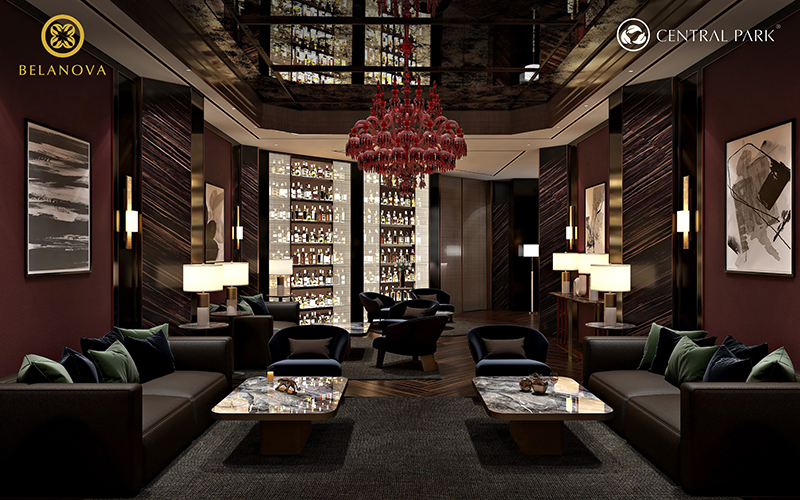
The ELIE SAAB partnership positions architecture, interiors and lifestyle as a unified narrative. Residences will incorporate elements from the ELIE SAAB Maison collection, developed in collaboration with architect Carlo Colombo and crafted in Italy. This is couture translated into living space — where design identity becomes the core differentiator.
For luxury buyers, brand-backed design credibility has become currency.
Gurugram: Exclusivity as Strategy
The Gurugram development is located in Sector 111 within the Smart City Delhi Airport (SCDA) zone — an emerging premium corridor near the Delhi border. Positioned within a curated enclave referred to as “The Billionaire’s Block,” the emphasis is deliberate: controlled density and exclusivity.
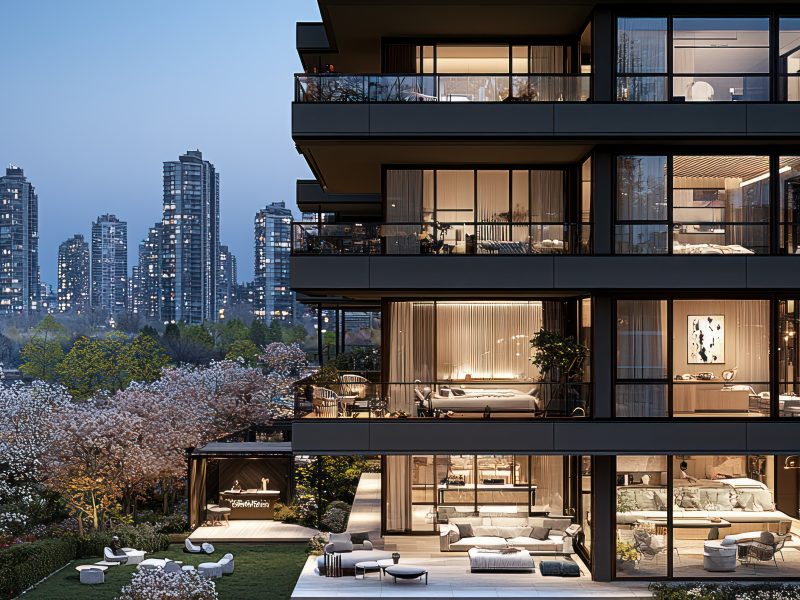
The project will comprise 300 four-bedroom residences ranging from 4,200 to 4,650 sq. ft., featuring floor-to-ceiling heights, wrap-around decks, waterfront views and private Jacuzzis. In NCR’s evolving luxury market, larger formats remain a clear marker of premium positioning.
For M3M India and Smartworld Developers, the collaboration reflects a conscious premium pivot. As Pankaj Bansal, Promoter, M3M India and Founder, Smartworld Developers, states: “Our collaboration with ELIE SAAB represents an important step in our vision to create residential developments defined by design integrity, quality, and long-term relevance. Through ELIE SAAB, we aim to deliver thoughtfully designed living environments that reflect global standards while addressing the evolving expectations of India’s premium homebuyers, in line with the Prime Minister’s vision of bringing the best of global expertise to the local market.”
The reference to long-term relevance underscores a key shift. Luxury housing in India is no longer about immediate visual impact; it is about sustained value, global benchmarking and brand-aligned positioning.
Noida: Connectivity as Capital
The Noida development in Sector 98 offers uninterrupted golf course views — traditionally a premium trigger in NCR’s housing market. Spread across six acres, it will include 200 three- and four-bedroom residences (2,850–3,810 sq. ft.) alongside 480 one- and two-bedroom apartments.
The configuration broadens the buyer profile — from ultra-luxury homeowners to upwardly mobile investors seeking branded inventory with rental potential.
Infrastructure resilience strengthens the investment case. Proximity to IGI Airport, connectivity to South Delhi and access to the upcoming Jewar International Airport support long-term capital logic.
India’s Strategic Luxury Moment
For ELIE SAAB, the India entry reflects strategic alignment rather than opportunistic expansion. As ELIE SAAB Jr., Vice Chairman and CEO of ELIE SAAB Group, notes: “India’s economic growth, expanding global outlook, and evolving luxury landscape make it a highly strategic market for the continued development of the ELIE SAAB brand. This evolution aligns naturally with ELIE SAAB’s growth as a global lifestyle brand. Through our partnership with M3M India and Smartworld Developers, we aim to bring our distinctive approach to design and living to the country — where architecture, interiors, and lifestyle are conceived as one — creating refined, timeless residential environments that resonate with India’s evolving aspirations.”
The statement reflects a broader global trend: fashion houses expanding into holistic lifestyle ecosystems — from hospitality to interiors and now residential architecture.
The Investment Conversation
India’s luxury real estate segment has strengthened over the past few years, with homes priced above ₹4 crore witnessing steady absorption across major metros. Wealth creation, entrepreneurial liquidity and a post-pandemic focus on experiential living have reshaped buyer priorities.
Branded residences offer potential advantages:
- Premium positioning
- Marketing differentiation
- Perceived resale and rental stability
- International visibility
However, premiums must be supported by execution. Delivery timelines, construction quality and sustained brand engagement will ultimately determine whether such projects maintain pricing strength over time.
Completion for the ELIE SAAB Signature Residences is scheduled for 2030, placing them within the long-horizon ultra-premium cycle — typically suited to buyers with holding capacity and strategic investment outlook.
Beyond the Label
Luxury in India is evolving beyond surface finishes. Buyers are seeking curated environments, controlled density and global design coherence.
Yet fundamentals remain decisive. Location, connectivity and developer credibility continue to underpin long-term appreciation.
ELIE SAAB’s entry into India’s residential landscape reflects a broader shift: India is no longer merely consuming global luxury — it is becoming a market where global luxury brands choose to build.
And for a new generation of premium homebuyers, that convergence of couture and concrete may well define the next chapter of India’s luxury real estate story.
NK Takeaway
There was a time when Indian developers chased global labels for validation. Today, global powerhouses are chasing India. That shift alone tells you how strategically important the Indian luxury market has become.
For developers, branded partnerships offer positioning advantage, pricing confidence and the perception of safer returns. For global brands, India is an attractive extension — a high-growth lifestyle market with rising wealth and aspirational buyers. In many ways, it is a smart expansion play.
But for consumers, the equation is more nuanced.
Branded residences sound compelling on paper. Yet questions remain. How long does the brand association last? What is the duration of the collaboration? If partnerships evolve — or dissolve — what remains: the brand value or just the building? In a segment built on perception, continuity matters.
There is also the contextual test. Will a couture aesthetic conceived in Paris or Milan translate seamlessly into India’s climate, density and social patterns? Luxury real estate is not just about finishes; it is about functionality.
And culturally, India is shifting. We are no longer chasing Guccis and Armanis for validation. If anything, Louis Vuitton is borrowing Indian craftsmanship and Prada is referencing Kolhapuri chappals. The luxury dialogue is no longer one-directional.
That makes this moment interesting — and worth observing.
Branded residences offer Indian homebuyers more choice than ever before. But as with all luxury propositions, the true test will lie not in the label, but in longevity, delivery and lived experience.
Couture can launch a project. Only context can sustain it.