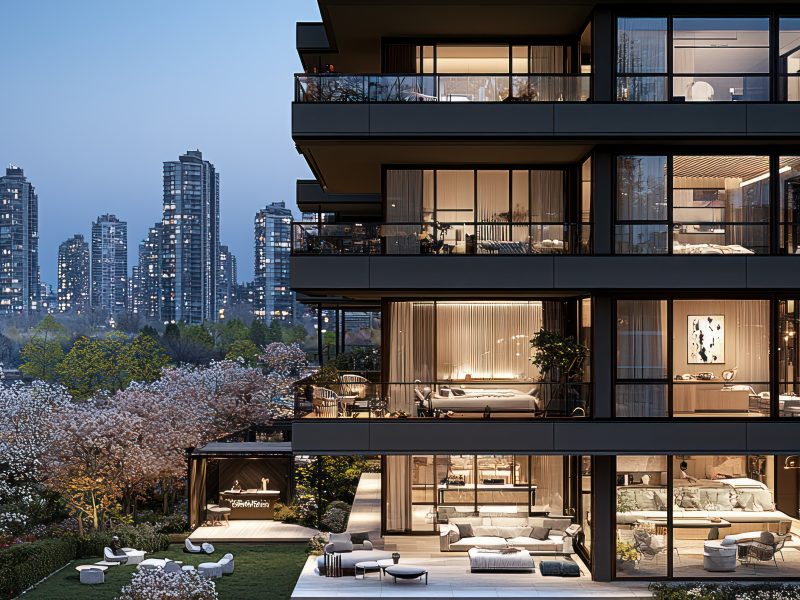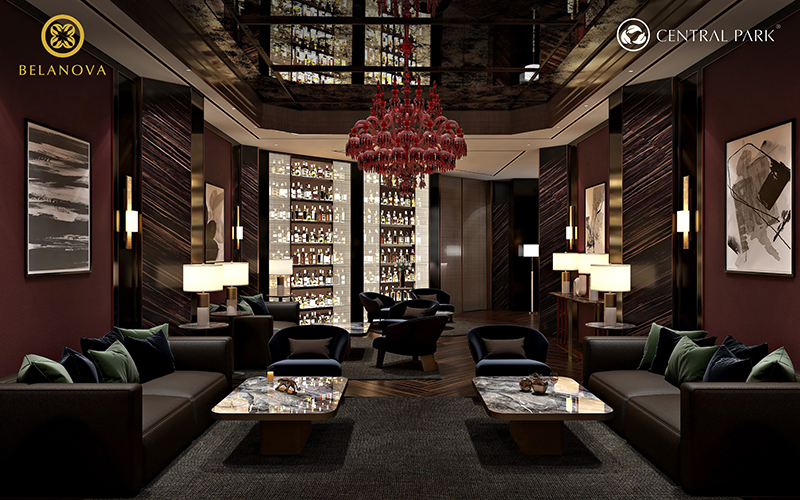
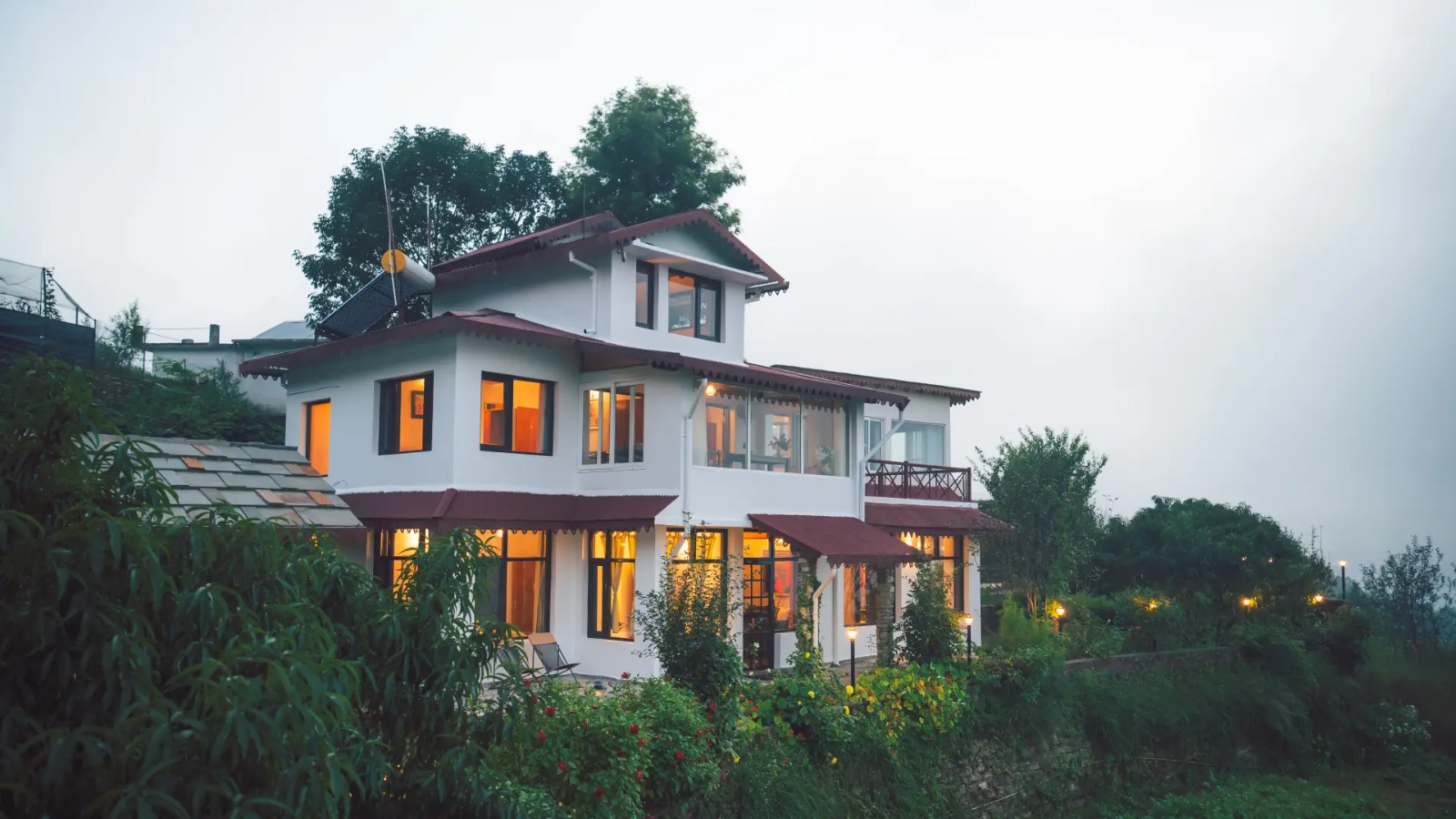
Across India’s tourist destinations, including Goa, Alibaug, Kasauli and the Kumaon hills, buyers are no longer just purchasing second homes for occasional use. A clear secondary objective has emerged: rental income. What was once a lifestyle purchase is increasingly becoming an income strategy.
The trend itself is not new. Holiday homes in hill stations and coastal regions have long doubled up as seasonal rentals. What has changed is the scale, structure and intent.
What is driving the shift in second-home buyer intent?
The evolution of the second-home market is also being driven by a change in how buyers think. According to Abhay Jindal, managing director of Homeland Group, which has a strong presence across the Chandigarh–Mohali region and is expanding into leisure markets such as Goa and Himachal Pradesh with second-home projects, the distinction between lifestyle and investment is fading.
“The second-home buyer has clearly changed. People are no longer choosing between a holiday home and an investment. They now want both. The market has also developed enough to support this thinking,” he says. In markets such as Mohali, Chandigarh and nearby hill regions, this shift is particularly visible. Buyers are approaching second homes with greater practicality, balancing personal use with rental potential.
“They want a home they can enjoy on weekends, but also one that can earn income during the rest of the week,” Jindal adds.
The emotional pull of a getaway home remains intact, but it is now accompanied by financial expectations. “When a property can generate steady income through short-term rentals, it no longer feels like just a luxury purchase. It becomes a more considered financial decision,” he says.
How is design influencing rental returns?
Design is emerging as a key determinant of rental performance. Returns were once driven largely by location. That equation is shifting. “Design is becoming just as important. Homes that are well planned, visually appealing and offer a strong living experience tend to attract more guests,” says Jindal.
Higher occupancy and better pricing often follow. In that sense, design is no longer aesthetic. It is directly linked to returns.
Certain fundamentals have also become non-negotiable. Privacy remains critical, particularly in leisure destinations where guests seek a sense of escape. Views add to desirability, while practical layouts and low-maintenance construction ensure operational ease over time.
Beyond the villa itself, performance is increasingly tied to the broader ecosystem. “It is no longer about standalone homes. We are creating environments where residents and guests have access to everything they need within the community,” Jindal notes.
Integrated amenities, hospitality-led services and curated facilities are becoming central to the proposition. This combination not only enhances the guest experience but also supports stronger occupancy and more consistent rental income.
Technology has played a decisive role. Platforms like Airbnb have formalised what was once an informal, broker-led market. Listings are visible, pricing is transparent, and demand can be tracked in real time. A discretionary purchase is now being evaluated as an income-generating asset.
How are experiences shaping high-performing rental villas?
The shift towards rental-led second homes is also being shaped by how properties are used and experienced. According to Rishi Modi, Airbnb Pro host and co-founder of Staymaster (a managed vacation home platform that monetises second homes via Airbnb), “What separates a high-performing property today is the experience it offers. Travellers, particularly younger cohorts, are looking for homes designed around shared living. Private pools, large communal spaces and functional kitchens are no longer add-ons. They are expectations.”
In markets such as Goa, this model is already delivering measurable outcomes. Well-managed villas can generate gross rental yields of 10 to 12 per cent, with portfolios like Staymaster operating at 70 to 75 per cent annual occupancy, levels comparable to, and in some cases exceeding, traditional hospitality benchmarks.
Service consistency has also become a key driver of returns. “The best-performing homes go beyond accommodation, offering curated in-stay services such as private chefs, housekeeping and concierge support. These can contribute an additional 15 to 20 per cent in revenue,” Modi notes.
Demand, meanwhile, is becoming more distributed. Travel is no longer concentrated around peak seasons. Long weekends, group travel and flexible work patterns are extending occupancy across the year. While established markets such as Goa, Delhi, Mumbai and Bengaluru continue to see strong traction, interest is expanding into quieter destinations including South Goa, Alibaug, Himachal Pradesh, Uttarakhand, Kerala and the Northeast. The pattern is clear. Demand is deepening and diversifying. Supply, in many of these markets, is only just beginning to catch up.
Do luxury villas offer better rental returns?
Returns vary significantly by asset quality. Take SaffronStays, a managed vacation home platform that converts private holiday homes into income-generating rental assets. Its portfolio is largely skewed towards luxury villas rather than budget stays.
According to Devendra Parulekar, standard homes may deliver stable but moderate income, while well-positioned luxury villas tend to generate stronger absolute returns. Higher nightly rates, demand for group stays and a preference for privacy support both occupancy and pricing.
Performance is also design-led. “Homes with a clear identity, strong privacy and amenities such as pools, views and shared spaces tend to attract better demand and rely less on discounting,” he adds. Efficient layouts and service infrastructure further support consistency.
Demand continues to favour accessible, nature-led destinations. Markets such as Lonavala, Alibaug, Karjat and Mahabaleshwar remain strong, alongside emerging pockets in Uttarakhand, Himachal Pradesh, Goa and the Nilgiris.
Why does property management play a crucial role?
In Goa, gated villa communities are being designed with rental management in mind, offering concierge services, housekeeping and platform integration. In hill destinations such as Kasauli and Mukteshwar, developers are positioning homes not just as retreats, but as managed rental assets. The pitch is simple: Use it when you want. Earn from it when you don’t. As a result, maintenance and management are no longer optional but integral to the asset.
Developers are building dedicated platforms to support this shift. Take The Blue Kite, the hospitality and rental arm of Vianaar. It manages bookings, pricing, guest services and upkeep, effectively creating and servicing the rental market for homeowners while ensuring alignment between design, operations and the end-user experience. According to Caroline Mulliez, CEO of The Blue Kite, nearly 75 per cent of buyers today factor in rental yields at the outset. “What was once a lifestyle-led decision is now financially informed. Buyers want homes that can generate consistent income when not in use,” she says. The pandemic accelerated this shift, pushing demand towards private, managed villas. That preference has sustained. As a result, homes are now designed and delivered with rental readiness in mind.
In established markets like Goa, rental yields typically range between 5 to 6 per cent, with occasional spikes during periods of high demand. Emerging markets such as Kasauli show similar potential, supported by limited supply of high-quality, design-led homes. The proposition is steady performance rather than outsized gains. Consistent rental performance depends heavily on professional management.
“Individual homeowners cannot replicate the systems required, from dynamic pricing and marketing to guest servicing and compliance,” Mulliez notes. Platforms such as The Blue Kite generate a significant share of bookings through their own networks, while also ensuring operational consistency and asset upkeep.
What are the costs of maintaining rental villas?
Maintenance remains a critical, and often underestimated, factor. Mulliez shares, “Core services such as housekeeping, security and upkeep can account for 25 to 30 per cent of annual rental income. These costs apply regardless of whether the home is rented out, making rental income a way to offset ongoing expenses rather than pure profit.”
To conclude, second homes today are no longer just about lifestyle. They are slowly becoming a mix of personal use and income. The returns are usually steady, not always spectacular, and depend as much on how well the property is managed as on where it is located. Rental income can help cover costs, but it is not a guaranteed payoff. At its core, a second home still works best when it balances enjoyment with sensible financial thinking.