As AI enters every decision system, we must correct the biases before it’s too late — else the AI age will become Gender Bias 2.0 where patriarchy gets amplified and auto piloted
When Leena Nair took over as Global CEO of Chanel, she did what many of us do in moments of transition — she turned to AI for clarity. She typed a simple question: “What does Chanel’s leadership look like?” The answer arrived with supreme confidence: all white. All male. All dressed in black, grey and blue. None of it was true. A luxury brand would never mandate black-and-blue formals, and Chanel’s leadership is far more diverse than the algorithm suggested.
But that is the quiet danger of artificial intelligence. AI does not sneer, interrupt or judge. It offers its answers with serene authority — even when they are factually wrong. And it is precisely this veneer of neutrality that makes algorithmic bias so insidious. AI doesn’t end biases; it elegantly recycles them. It performs a kind of algorithmic déjà vu — replaying old hierarchies with fresh polish.
Nair’s experience is not an anomaly. Type “CEO” into an image generator and you will see an assembly line of men in suits. “Nurse” yields women. “Engineer” returns men. These systems do not intend to discriminate; they merely mirror the world we have shown them. Code has no gender, but its creators do. So the question becomes urgent: Is AI reinforcing old inequalities or redefining equality for the next generation?
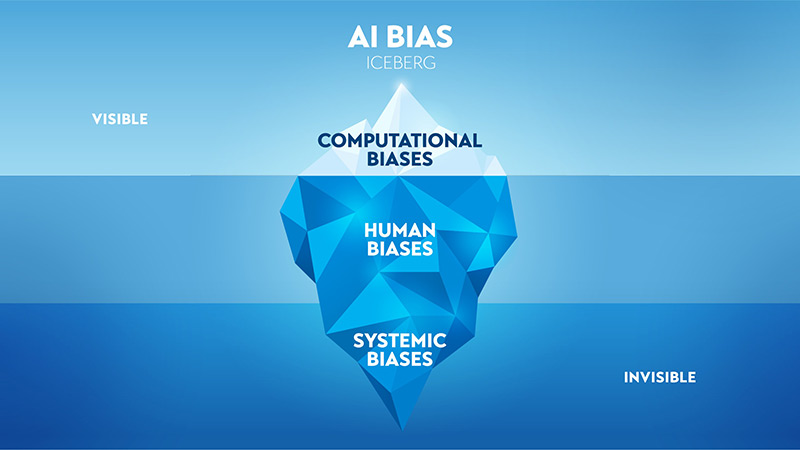
AI learns from the past — and the past isn’t gender-neutral. If historical hiring data shows fewer women in leadership, an algorithm trained on it will inevitably “learn” that men make better managers. Most training datasets mirror this imbalance: more male CEOs, male scientists and male “professionals,” and disproportionately more women represented as assistants or “helpers.” When biased history becomes AI’s raw material, biased outcomes become its default.
These conversations took centre stage at the recent Equiverse conference titled “Equity in the Age of Automation”, an event hosted recently by TalentNomics, a global leadership organisation working to advance women’s leadership and economic empowerment. Speaking at the event, Ipsita Kathuria, Founder & CEO, TalentNomics India, captured the urgency: “AI is galloping away at an unprecedented pace. It is changing how we work, live and communicate — but who is thinking about how it is impacting gender parity? Can AI reduce the gender gap in work, wealth and wellbeing? Whose responsibility should that be, and how can we all collaborate to focus on this issue? That was our motivation to hold this conference on Equiverse, bring it to the attention of key leaders, large and small organizations, who are developing AI, who are doing research to influence policies around it and those of us who use it in our everyday life.”
The stakes are enormous. AI may entrench inequality more deeply than any old boys’ club ever could. As Indian companies automate hiring, banks shift to algorithmic credit scoring, and governments adopt AI-driven decision systems, we need to ask: What happens when systems mis-see women?
Soumya Rajan, Founder & CEO, Waterfield Advisors, puts it sharply: for long, women were stereotyped as not taking risks. But women are “not risk-averse”; they are “risk-aware”, she said during the TalentNomics conference. “They trade less, orient towards goals, and are more conscious in their financial decisions,” says Rajan. If AI misinterprets this as “low confidence,” women are penalised for the very traits that make them prudent investors.
Equality, therefore, needs intentional inclusion — women coders in labs, women ethicists on boards, women founders in AI start-ups, and gender-sensitive policy at the regulatory level. As Shalaka Verma, Head of Customer Engineering at Google Cloud, says: “The more diverse the data, the better the code. and that begins with having diverse teams at the table. Diversity is not a nice-to-have in AI. It is a safety feature.”
And yet, women remain missing from much of the world’s data. If women haven’t been pictured, quoted, promoted or celebrated enough in the real world, AI simply assumes they don’t exist in the digital one. Erasure becomes an algorithmic default. Einstein captured this long before machine learning existed:
“Not everything that can be counted counts — and not everything that counts is counted.”
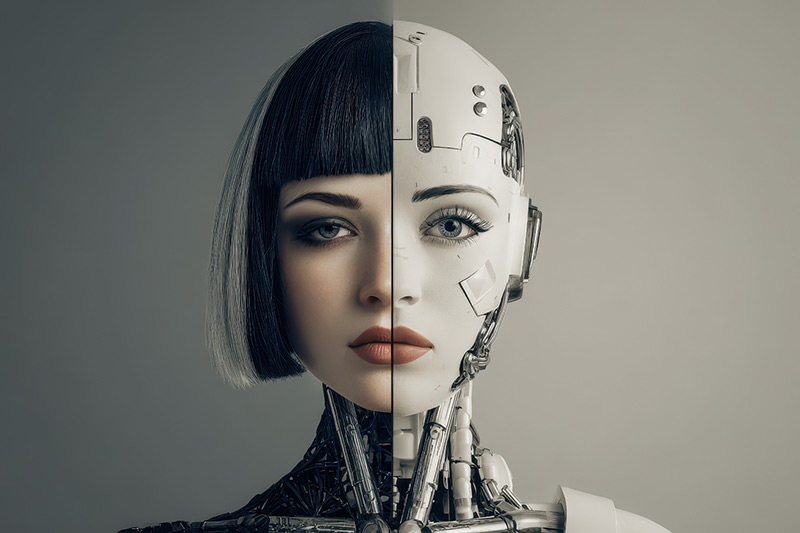
Is Technology then affected by biology? Code has no gender — but its creators do.
Women’s experiences, needs, bodies and realities are routinely not counted. And if they’re not counted, they’re not coded. Bias shows up at every layer of the AI stack.
Hiring tools routinely penalise women for “career breaks” and reward male-coded language such as “assertive,” while undervaluing female-coded traits like “collaborative.” Facial-recognition systems work best on lighter-skinned men and frequently misidentify darker-skinned women. Online safety is even more alarming: more than 96% of deepfake content targets women globally, with Indian journalists, politicians and activists increasingly attacked through AI-generated abuse.
Even the technologies we use daily carry bias — voice assistants that default to polite, compliant female voices subtly teach children that “female” systems are meant to be commanded.
These patterns are not accidental. They are the by-products of an industry where only 20–22% of AI professionals globally are women. Fewer women collecting data, asking questions, designing safety protocols or challenging harmful outputs means fewer opportunities for course correction.
India’s female digital divide makes the problem even sharper. Only one-third of Indian women have meaningful internet access. As AI begins to shape who gets loans, jobs, healthcare, benefits and opportunity, women risk becoming statistical outliers — invisible to systems that determine their futures.

But the story doesn’t end there. AI can still be an extraordinary equaliser — if built consciously. It can detect online misogyny faster, improve maternal healthcare access, empower women entrepreneurs, give rural women digital visibility, and offer low-cost legal or mental-health support at scale.
As Verma says, “The age of ordinary is over. If you’re not using the tools available to become the best version of yourself, someone else will.”
Women must not sit out the AI revolution. They must sit at the centre of it — as creators, coders, critics and decision-makers. The question is no longer whether AI will enter women’s lives, but whether women will shape the AI that enters theirs.
If we want a world that finally sees women, the mandate is simple: fix the data, or the future will fail half its population.