A painting once bought for the love of art is now increasingly being acquired with an eye on its value in an investment portfolio. At recent auctions, Indian artworks have crossed the Rs 50 crore-Rs 100 crore mark, placing artworks by M F Husain, Tyeb Mehta, and S H Raza firmly among global collectible assets. What was once a niche indulgence is now entering the vocabulary of wealth managers, family offices, and high networth individuals as a serious alternative investment class.
The shift is subtle, but unmistakable: art in India is moving from walls to wealth strategies.
How is art entering India’s wealth and investment conversation?
For decades, Indian wealth has largely been parked in real estate, gold and equities. But as portfolios mature, investors are increasingly seeking assets that combine financial upside with cultural capital. Art fits that brief uniquely.
“It’s no longer just about collecting what you like,” says a Mumbai-based wealth advisor. “Clients today are asking: what has auction history, global demand, and long-term appreciation potential.”
The rise of platforms such as Saffronart, AstaGuru, Hurun Research has brought greater transparency, allowing buyers to track historical prices and benchmark artists. In a market once driven by private networks, data is slowly entering the canvas. According to Anas Rahman Junaid, the Hurun India Art List 2025 shows the top artists together recorded Rs. 310 crore in auction turnover, with the top 10 accounting for nearly 70% of the market. Blue-chip names such as Anish Kapoor, Krishen Khanna and Sakti Burman continue to lead. Importantly, the entry barrier is rising. The threshold to enter the Top 50 has climbed from Rs.10 lakh five years ago to Rs. 60 lakh today, while the top ten now begins at Rs. 7.8 crore—highlighting growing competition for high-quality works. “As the Indian economy grows, the number of collectors is rising and demand continues to strengthen,” says Junaid. “At the same time, supply remains limited—an artist can only produce a finite number of works.”
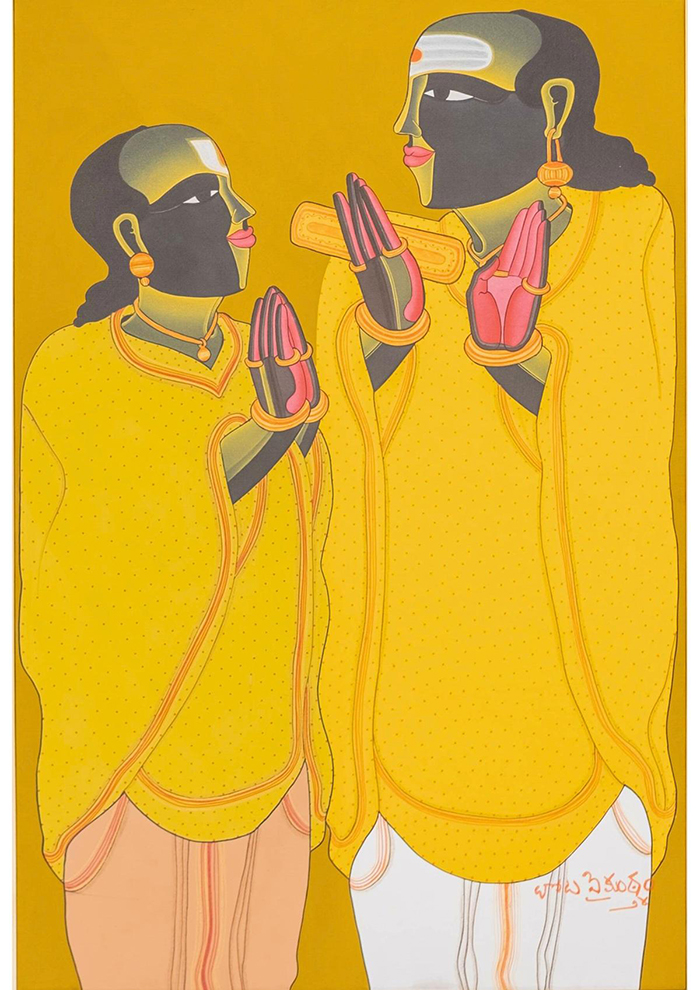
In 2025, 995 artworks were sold at auction, a 26% increase year-on-year, signalling deeper participation in the market. For investors, however, expectations must remain measured. “Art rewards patience,” Junaid notes. “In 2024, Indian art delivered around 3% returns—modest compared with gold or equities—but its strength lies in value protection and low correlation with financial markets.” Painting continues to dominate the market, particularly figurative and narrative styles, with artists like Thota Vaikuntam, Manu Parekh and Anjolie Ela Menon seeing strong demand. At the same time, sculpture is gaining traction, with artists such as Ravinder Reddy drawing increasing collector interest—signalling a market that is both deepening and diversifying.
Art is no longer just an aesthetic choice—it is increasingly being viewed as an asset, an heirloom, and a marker of cultural capital. Devin Gawarwala of Bespoke Gallery, Ahmedabad, whose collection includes masters such as Satish Gupta, Thota Vaikuntam, Himmat Shah, Manu Parekh and international names like Timur D’Vatz, sees art as both investment and inheritance. “Art makes for an invaluable investment and a family heirloom passed across generations,” he says. “While buyers may not always fully understand its financial return or historical depth, art enriches a space with energy and positively impacts the psyche—it is, quite simply, food for the soul.”
Gawarwala notes that most serious collectors today are gravitating towards blue-chip, museum-grade artists. “We don’t recommend works that won’t hold value for our buyers,” he adds, pointing to a growing interest in sculpture. “Sculpture offers a more immersive experience — it exists in space, not just on walls. For collectors, the value lies not only in returns, but in how the work elevates their environment.”
Why the wealthy are buying art
Three clear motivations are driving this shift. First, capital appreciation. Over the last two decades, select Indian artists have delivered returns comparable to, and sometimes exceeding, traditional asset classes. Second, portfolio diversification. Art has low correlation with equities and bonds, making it an attractive hedge in volatile markets. Third, and perhaps most uniquely, cultural capital. Unlike stocks or gold, art carries narrative, identity and legacy. It is an asset that can be displayed, inherited and talked about.
“Art sits at the intersection of emotion and investment,” says a Delhi-based gallery owner. “That is what makes it powerful—and complicated.”
A structured approach to investing in Indian art
But investing in art is not as straightforward as buying a stock. Experts caution that it demands discipline, not impulse. Prem Kandwal, art collector, researcher and independent scholar, argues that the market is not monolithic but divided into distinct segments, each with its own risk and return profile.
These include oleographs and early prints linked to Raja Ravi Varma, rare illustrated books and engravings by artists such as Thomas and William Daniell, canvas paintings ranging from old masters like Ravi Varma and Nandalal Bose, to modern names like Krishen Khanna and Anjolie Ela Menon, and sculpture spanning Chola bronzes to Dhokra traditions. Across categories, value hinges on rarity, originality, condition and provenance.
Kandwal advises collectors to build depth in one segment before diversifying, prioritise quality over quantity, and verify authenticity rigorously. “Indian art should be approached with structure, discipline and long-term vision,” he says, warning against hype-driven purchases, over-restored works, and expectations of quick liquidity.
Art, he emphasises, is a long-term play. Moderate appreciation may emerge over 7-10 years, while museum-quality works can deliver stronger returns over 15-20 years. The rewards, he notes, accrue not to speculation—but to patience, knowledge and conviction.
What risks do investors face in the art market?
For all its allure, art remains a complex asset class. It is illiquid, often taking time to resell, while pricing can be opaque—especially in private transactions. Authenticity, provenance and condition require rigorous verification, and value is ultimately shaped by taste, which can shift over time.
Roshini Vadehra, director, Vadehra Art Gallery, cautions against viewing art purely as an investment. “It is not a liquid asset like stocks and shares, and hidden costs such as commissions and capital gains can make it difficult to generate returns,” she says, adding that meaningful gains typically require long holding periods—and often, early-stage entry into an artist’s career.
Is art more than just an investment asset?
To view art purely through a financial lens would be reductive, since it reflects taste, worldview and identity. It sits in homes not merely as an asset, but as a statement. And in a world where wealth is increasingly financialised, it remains one of the few assets that hold meaning beyond just money.
Artist Satish Gupta underscores this perspective: “My job is to paint. I let the market take care of itself. Art, above all, is meant to lift your soul, to nourish you, to take your mind off the mundane and connect you with the best within yourself. Buying art as an investment is a by-product, it should never be the primary reason.”
He adds, “The works I own, including my collection of Chola bronzes, are for me to cherish. I am told their value has appreciated significantly, but I have never thought of selling them. Value, in art, is deeply subjective. Even a modest piece can be an extraordinary investment because of the connection it creates.”
How is art reshaping India’s definition of wealth?
What we are witnessing is not just rising art prices, but a shift in how Indians define wealth. From physical assets to financial instruments to cultural investments, portfolios are becoming more layered, more global, more expressive. Art is no longer peripheral. It is moving to the centre of the wealth conversation. And in the world of wealth, art may be the only asset that appreciates not just in value but equally in meaning.