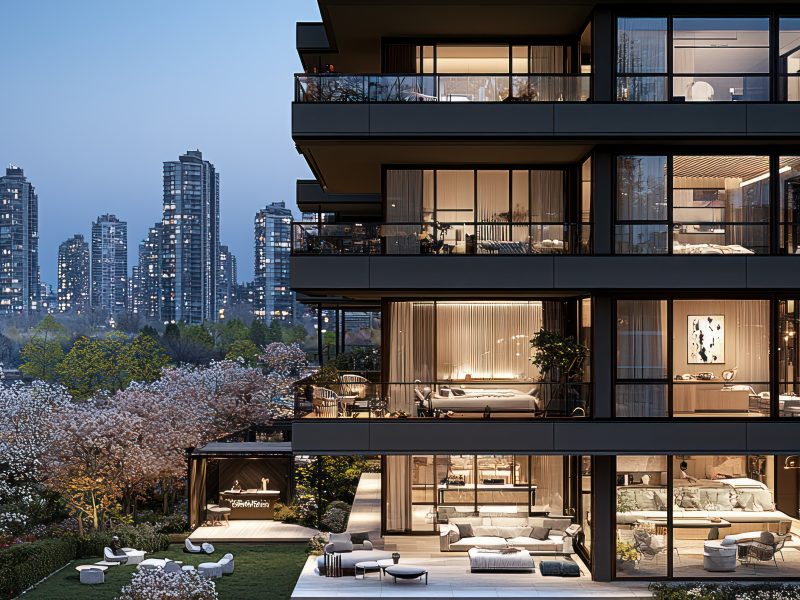
Jaipur’s residential market is undergoing a visible shift. A city once dominated by standalone homes and plotted developments is increasingly embracing gated high-rise living shaped around amenities, wellness, lifestyle convenience — and equally, long-term maintenance and community management. Located on New Tonk Road in South Jaipur, Mahima Ecovista reflects this transition with a low-density format built around privacy, greenery, curated living and an in-house maintenance ecosystem designed to preserve the quality-of-life years after possession.
For Mahima Group, maintenance is positioned as a key differentiator. The developer manages projects through its own in-house sister concern rather than outsourcing operations to third-party facility agencies — handling everything from repairs and plumbing to overall upkeep and community management. The idea, say the developers, is simple: residents should experience the same environment, facilities and standards even a decade after moving in.
Namrata Kohli catches up with Nikhil Madan, CEO, Mahima Group, and Kirti Madan, Creative Director, Mahima Group, on the sidelines of the launch of Mahima Ecovista in Jaipur to discuss the changing face of Tier-2 real estate, the rise of gated high-rise living, and how lifestyle aspirations — along with long-term maintenance expectations — are reshaping homebuyer preferences.
Ques: Please tell me about your latest project, Mahima Ecovista.
Nikhil Madan: Mahima Ecovista is spread across 3 acres with just 130 apartments and nearly 80 per cent open space, creating a low-density, lifestyle-led environment in the middle of Jaipur. The project has 22 floors and focuses on greenery, privacy and minimal vehicular movement at the ground level.
We are offering 3.5 BHK residences with a super built-up area of 2,800 sq ft and carpet area of 1,760 sq ft, priced around ₹2.5 crore. The 4.5 BHK residences have a super built-up area of 3,867 sq ft with a carpet area of nearly 2,500 sq ft, priced around ₹3.5 crore. Every apartment comes with two parking spaces across basement levels minus one and minus two.
Ques: How does the pricing structure work and what is your view on regulation in real estate?
Nikhil Madan: There is no premium location charge from the ground floor to the fourth floor. From the fifth to tenth floor, the PLC is ₹100 per sq ft per floor, from the eleventh to sixteenth floor it is ₹200 per sq ft, and from the seventeenth to twenty-second floor it is ₹300 per sq ft on the super built-up area.
The coming of RERA has been a very positive development for the industry. However, financial discipline has always been part of our company philosophy. My father has always maintained separate escrow accounts for every project from the very beginning.
Ques: Jaipur and many Tier-2 cities traditionally preferred standalone homes because people liked owning land and having independent spaces. But over the last few years, there’s been a visible shift towards gated communities and high-rise living. What is the big reason for this transformation?
Kirti Madan: The biggest reason is lifestyle and convenience. Earlier, if you wanted amenities like a swimming pool, tennis court or recreational spaces, you had to depend on clubs or external memberships. Today, people want everything within their own ecosystem.
Once families started experiencing gated communities, they realised the value of security, amenities and community living. At the same time, buyers still want homes that feel spacious and comfortable. Families are becoming smaller, everyone values personal space more, and even older couples now prefer secure, low-maintenance homes where they can retire comfortably.
That combination of convenience, safety, amenities and modern lifestyle aspirations is really driving the transition from low-rise to high-rise living.
Ques: Once you create a project, what about long-term maintenance?
Nikhil Madan: In a gated society, maintenance becomes extremely important because residents expect the same quality of living even years later. One thing we consciously focus on is that once we deliver a project, we do not step away from it. We have an in-house sister concern which takes care of everything — from plumbing and repairs to overall maintenance and upkeep of the society.
The idea is that even after 10 years, residents should continue to experience the same environment, facilities and quality that they saw when they first moved in. We do not outsource management to an external agency. Everything is handled in-house, and very few developers actually do that.
Honestly, maintenance is the hardest part of real estate. Creating and selling a beautiful product is comparatively easier. The real challenge begins after delivery because maintaining standards consistently over the years takes effort and commitment
There is a maintenance charge, of course, but it differs from society to society depending on the scale, facilities and services being offered.
Ques: Currently, there is clear premiumisation in real estate, with most developers moving towards premium and luxury housing. This seems true for Mahima group as well. How do you create a differentiator?
Kirti Madan: Mahima has catered to every segment over the years — from mid and lower-mid housing to premium projects. But today, our focus is clearly shifting towards the higher-end and luxury segment because that is where demand is growing. Buyers now want integrated living with amenities, wellness spaces, security and convenience all within a gated community.
What differentiates us is quality and delivery. Our philosophy has always been to deliver exactly what we promise — sometimes even more. Whether it is construction quality, waterproofing, lifts, landscaping or amenities, we do not compromise. That legacy comes from my father-in-law and continues to define Mahima even today.
At the same time, we focus on creating modern living spaces while still respecting Jaipur’s local character, flora and environment. That balance between contemporary living and rooted design is important to us.
Amenities today are expected, but for us the focus is on how thoughtfully they are integrated into everyday living. Our “Club Five Senses” concept is built around wellness, greenery, spaciousness, family living and convenience. The idea is that everything — from swimming and sports to spa and recreation — is available within the gated community itself, making luxury more seamless and lifestyle-driven.
Ques: The project has just 130 apartments across 3 acres and nearly 80 per cent open space. How does that work financially?
Kirti Madan: Ecovista was envisioned as an urban sanctuary in the middle of Jaipur — a calm, green space where residents can experience peace and privacy without moving away from the city. That is why nearly 80 per cent of the project is open and green.
We wanted to create a luxury product that remains aspirational and accessible to a certain segment of buyers, without overcrowding the development. The idea was never “affordable luxury” — because luxury and affordability are very different concepts. For us, it was about creating a beautiful, thoughtfully designed lifestyle experience with space, greenery and tranquillity at its core.
Ques: What is the demographic profile of buyers today? Are they industrialists, local Jaipur buyers, investors or NRIs?
Kirti Madan: It’s actually a very diverse mix. In some of our older projects, we have a large concentration of doctors and professionals because of the location near major hospitals. In projects like Ecovista, we are seeing younger, successful professionals in their 30s and 40s buying aspirational homes, alongside older buyers looking for a more relaxed and secure lifestyle. We also have investors who prefer buying with Mahima because of the trust factor and long-term value appreciation we focus on creating for customers.
Ques: In Delhi’s premium housing market, we are increasingly seeing layouts with two master bedrooms, reflecting the return of joint-family style living. Are you seeing a similar trend in Jaipur?
Kirti Madan: Absolutely. In fact, at Ecovista, we have also designed apartments with two master bedrooms for exactly this reason. Families today want co-existence with privacy and equality within the home. Parents should not feel they are compromising, and the younger generation should also have their own space and comfort.
That balance between togetherness and individuality is becoming increasingly important in modern luxury housing, and it is something we consciously try to incorporate into our projects.
Ques: What is your take on “By Invitation” luxury projects, where access itself becomes selective?
Kirti Madan: It is definitely a growing trend in the uber-luxury segment. A certain category of buyers values privacy, exclusivity and being part of a like-minded community. Today, luxury is no longer only about money — it is also about lifestyle, social comfort and shared sensibilities.
So while some may see it as artificial exclusivity, many buyers genuinely prefer curated communities where they feel more aligned with the people around them.