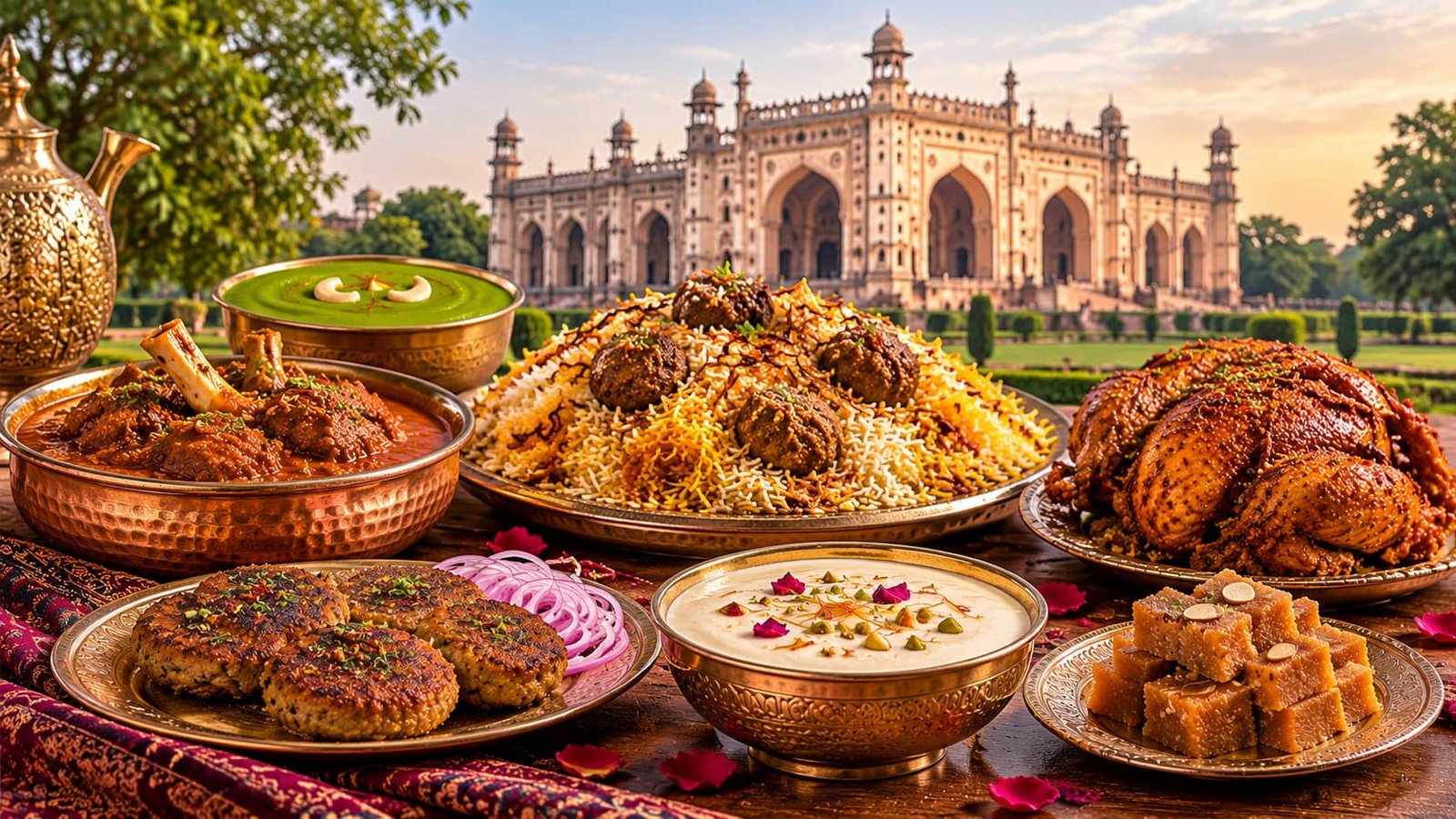
Closely guarded royal recipes and forgotten regional delicacies are finding their way onto fine-dining menus, where provenance, rarity, and culinary craftsmanship command a premium
Not too long ago, deciding where to eat out in India was fairly simple. You would end up choosing between North Indian, South Indian, Chinese, Italian, or the ubiquitous ‘Mughlai’. Today, even Mughlai seems too broad a description for the curious diner. Is the kebab from Rampur or Lucknow? What makes a Rampuri biryani different from a Hyderabadi one? And is there a story behind the recipe?
India’s newest food trend, it seems, may well be its oldest one. Closely guarded recipes from the royal kitchens of Rampur and Awadh, dishes that travelled along the Grand Trunk Road, and delicacies that were once the preserve of certain communities and households are finding their way onto fine-dining menus. To call it a revival would be only partly correct. For many Indians, this is food from their own country that they are tasting for the very first time.
From palace kitchens to premium dining
In Delhi, Mezbaan-e-Rampur at Le Méridien New Delhi is bringing the cuisine of the erstwhile princely state to the table, opening a window into a culinary tradition often casually clubbed with Mughlai or Awadhi cuisine.
“At Le Méridien New Delhi, we believe a great hotel should be a curator of culture as much as a host. Geography of Taste is our answer to that. It is a series in which we seek out cuisines that deserve a place at the forefront of fine dining, and trace each one back to its land and its people,” says Meena Bhatia, vice president and general manager, Le Méridien New Delhi. Having explored the cuisines of Bihar and the Frontier provinces, the hotel turned its attention to Rampur, a princely state founded in 1774, whose culinary secrets remained behind palace doors for generations. For Mezbaan-e-Rampur at eau de Monsoon, the hotel collaborated with Nawab Kazim Ali Khan, scion of the Rampur royal family, to present the Royal Dastarkhwan.
What makes Rampuri cuisine distinct from Awadhi or Mughlai is the Pashtun origins of Rampur’s rulers and the state’s historical association with Awadh, which resulted in a cuisine that combined Afghan tastes and local produce with Awadhi, Mughal, Persian, and Central Asian influences. Food historian Tarana Husain Khan places it between Mughlai and Awadhi, but with simpler aromatics. “There is no kevda, ittar or rose water, and saffron and nutmeg are used sparingly,” says Bhatia.
Among the signature dishes are Mutton Taar Korma, with its distinctive silken, thread-like gravy; Shab Deg, simmered overnight in yoghurt; and Rampuri Yakhni Mutton Biryani, known for its subtle flavours. Part of the appeal lies in the fact that these recipes come from the royal household itself. “For us, the aim is to give each cuisine in the series its own name, story and table. At Mezbaan-e-Rampur, these recipes are served as the Nawab’s family has always served them. Guests meet the cuisine through the family that preserved it,” says Bhatia.
For the hospitality industry, this growing curiosity is also a business opportunity. At a time when almost any cuisine can be ordered at the touch of a button, there is a certain premium attached to eating something that isn’t available everywhere. Padma Shri Prof. Pushpesh Pant, food historian, author and culinary heritage expert, attributes this renewed interest to two things: the nostalgia for food we grew up eating and the fascination for food we never had access to. The latter explains the aspirational appeal of royal cuisine.
But ‘heritage’ food need not have a royal pedigree. It could be a grandmother’s recipe handed down through three generations in an ordinary household. “Royal kitchens, however, hold a special fascination precisely because so few people had access to them. While Rampur, Awadh and Hyderabad are relatively familiar names, the culinary traditions of the royal houses of Kangra, Jaipur, Jodhpur, Mewar and Indore remain largely unexplored by the average Indian diner,” says Pant.
Slow cooking, quick delivery
But a food-lover needn’t necessarily have to visit a five-star hotel to savour heritage cuisine. In Mumbai, Gee Tee Road, a cloud kitchen, is bringing home the flavours of one of the world’s oldest trading routes, the Grand Trunk Road. “North Indian food has travelled everywhere in the country and the Grand Trunk Road was one of its earliest routes. As the food travelled, each region adopted and adapted it and, over time, it drifted away from the places, techniques and traditions it came from,” says Shabana Raikar Sen, co-founder of Gee Tee Road.
For the founders, the venture is deeply personal, drawing upon memories of growing up, living and eating in different parts of the country. “Mumbai is hungry for authentic North Indian food and we are striving to serve our customers the real food from the Grand Trunk Road,” says Sen.
But how does a business built around the convenience of home delivery accommodate food that takes hours, sometimes an entire night, to prepare? “We think a cloud kitchen exists for convenience; that doesn’t mean it only serves fast food. Our philosophy is simple: the best ingredients, traditional recipes and no shortcuts,” says Sen. The masalas are roasted, ground and blended in-house, even pounded by hand. Head chef Honey, who grew up in Lucknow and learnt these recipes at home, has documented them in detail and trained his team to strictly follow traditional cooking methods.
Contrary to the popular perception that standardisation robs food of character and individuality, Sen believes it can actually protect culinary heritage. Marinating, dum cooking, and simmering dals for hours are all done well in advance. “That way service is quick, but the cooking never is,” she says.
Of course, not everything lends itself to home delivery. “Some dishes just don’t travel,” admits Sen. The founders are now preparing to launch Due North, an elevated dine-in concept for dishes best enjoyed fresh from the kitchen rather than out of a takeaway box.
What justifies the premium?
Getting hold of an old recipe is perhaps the easiest part of recreating heritage cuisine. Finding the right ingredients and someone who knows what to do with them is another matter altogether. Pant points out that many dishes prepared in royal kitchens required a degree of finesse, ingredients not commonly available in the market, and cooks trained in particular techniques. Luxury hotels have the resources to undertake such elaborate exercises, which explains why heritage cuisine often finds a natural home in curated food festivals and limited-period pop-ups.
Even the equipment we use in our kitchens has changed. The mixer-grinder has replaced laborious hand-grinding, and the pressure cooker has considerably shortened cooking time. A dal that once simmered through the night can now be rustled up in a fraction of that time.
Pant also cautions against getting too carried away by the romance of a culinary backstory. “There is a story of a food. But that may be authentic or it may not be authentic. It may be a marketing gimmick,” he cautions. For consumers, it is worth finding out what goes into the making of a dish before paying a premium for it. A royal name on the menu alone does not justify a royal price.
Old recipes, new presentation
Not everyone in the restaurant business is attempting to recreate the past. Some chefs are drawing upon regional culinary traditions to create something more contemporary. At INDY in Noida, dishes such as Kashmiri Gucchi Curry and Kerala Fried Chicken find a place on a menu built around the philosophy of ‘India, Reimagined Through Travel’. Regional significance, distinctive ingredients and the stories associated with dishes determine what makes it to the menu.
“We retain its defining ingredients, flavours and regional identity while bringing a contemporary approach to presentation and plating,” says Chef Manish Kumar, corporate executive chef at INDY.
There is room for such experimentation. Heritage food need not be frozen in time, nor does it necessarily have to be served in an antique brass thali to establish its credentials. The modernity can be on the plate without compromising the heritage for the palate.
The hyperlocal appeal
Some of India’s most interesting culinary discoveries lie far beyond its palaces. At Kahaani: Foods of India, a festival curated by Indophile, a venture dedicated to celebrating India’s cultural heritage, 12 chefs showcased hyperlocal culinary traditions, including the use of mahua flowers in Jharkhand’s tribal cuisine and the fiery raja mirchi of Nagaland.
Aishwarya Jha, co-founder of Indophile, attributes this growing interest to increased travel, social media, and greater awareness of indigenous ingredients. Travellers who once sought familiar food in unfamiliar places increasingly want to eat what the locals eat. Jha points to the proliferation of regional food pop-ups and the journey of the humble panta bhat (fermented rice and water) to the finale of MasterChef Australia.
There is also an urgency to preserving these traditions as indigenous ingredients, utensils, and cooking techniques disappear from everyday kitchens. At the festival, several guests were tasting food from Meghalaya for the first time, discovering dishes rarely available even in restaurants in the region. “People are looking for new experiences, not products; stories, not taglines; and they are definitely willing to pay a premium for something more meaningful,” says Jha.
For years, Indians looked overseas for culinary sophistication, often overlooking the richness of our own kitchens. The good news is that what was once taken for granted at home is finally finding its place, and its price, on the fine-dining table.