
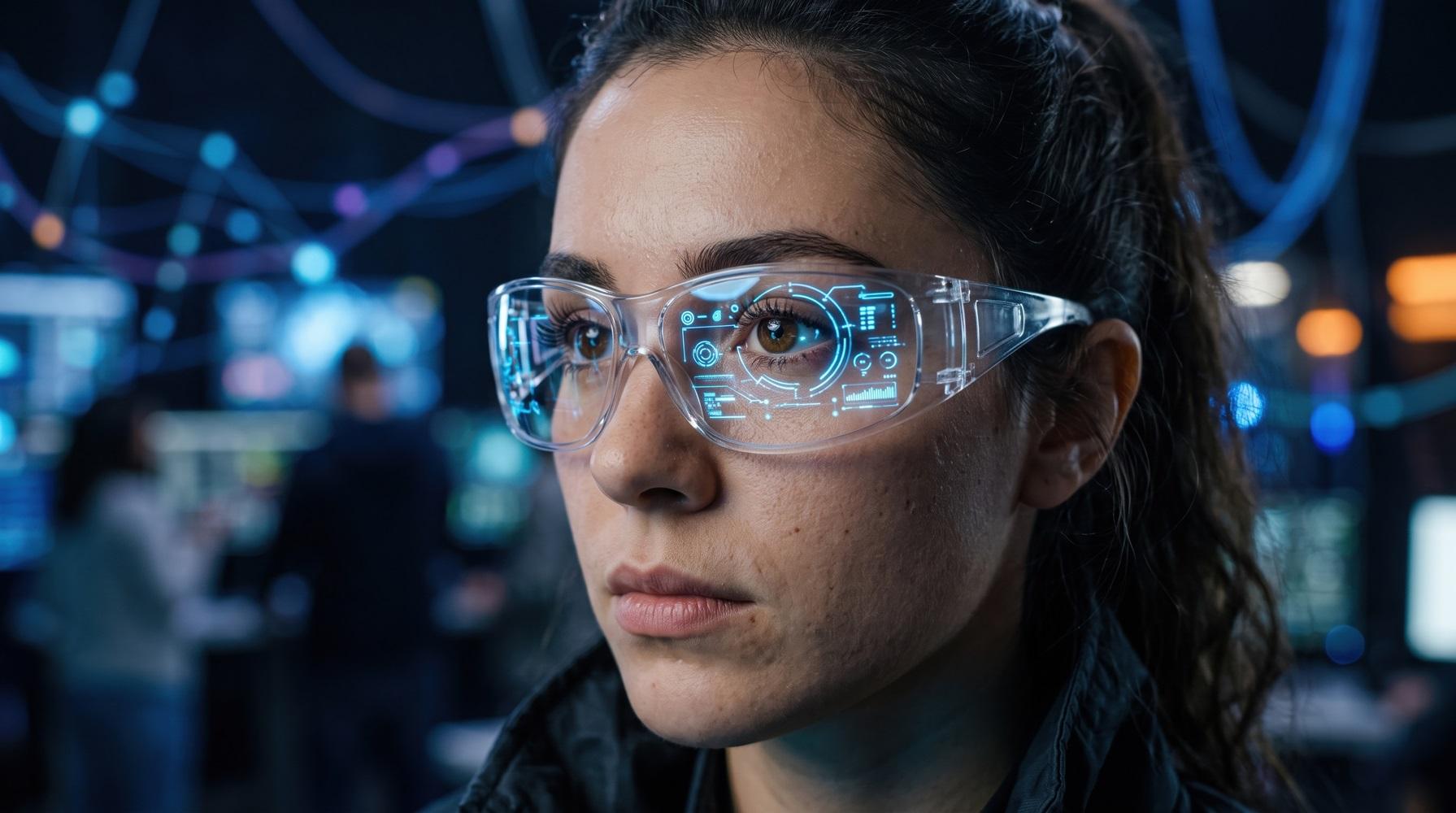
A decade ago, wearing a pair of glasses meant one of two things: you either couldn’t see clearly or you wanted to protect your eyes from the sun. Cut to today, and a pair of spectacles can photograph what you’re looking at, answer your questions, translate conversations, play music, tell you where to turn next and even remember where you parked your car.
The latest generation of AI-powered smart glasses is quietly changing what eyewear can do. Instead of reaching for a smartphone every few minutes, users can interact with technology simply by speaking to their glasses. They look almost identical to regular frames, but hidden inside are cameras, microphones, speakers, and artificial intelligence (AI) that respond almost instantly.
For consumers, this also opens up a new category of discretionary spending. After smartphones, smartwatches and wireless earbuds, eyewear is emerging as the next wearable technology that companies hope people will eventually use every day.
Beyond Vision Correction
The biggest change is that glasses are no longer just about correcting eyesight. Take the Ray-Ban Meta smart glasses. Users can capture photographs and videos without taking out their phones, listen to music, make calls, livestream experiences and ask Meta’s AI assistant questions through simple voice commands.
According to Afzal Imam, store manager at Siddharth Opticians in Delhi, the response has been stronger than many expected. “We’ve seen tremendous interest in the Ray-Ban Meta glasses,” he says. Retailing at around Rs 39,900, they have become one of the most talked-about products among customers looking for wearable technology. The previous generation is still available for about Rs 29,900.
Interestingly, buyers aren’t necessarily replacing their existing spectacles. Most see the device as an additional gadget, much like a smartwatch.
From curiosity to convenience
Technology journalist Pranav Dixit believes the category has reached an important turning point. “AI glasses have gone from being a CES curiosity to something I’ve actually used, and the progress has been surprisingly rapid,” he says.
The current generation already performs a surprising number of everyday tasks. “They can capture photos and videos hands-free, translate conversations, answer questions, identify landmarks and objects, play music, make calls and even provide navigation. The next generation will add lightweight displays and better contextual awareness, making them feel less like another gadget and more like an assistant that’s always available,” says Dixit. That, he believes, is what will ultimately determine their success. Rather than replacing smartphones, smart glasses are likely to complement them by allowing users to stay connected without constantly looking down at a screen.
India is unlikely to miss this shift. “Companies like Lenskart and Jio are already working on AI-powered smart glasses for the Indian market. Over the next few years, the category could follow a path similar to wireless earbuds—from an expensive novelty to an everyday accessory.”
AI comes to eye care
The impact of artificial intelligence extends well beyond consumer gadgets. Optical retailers and eye care professionals are increasingly using AI during diagnosis and screening.
According to Sarvash Kalra, director of Dayal Opticals, AI-enabled retinal imaging is making it easier to detect diseases such as diabetic retinopathy, glaucoma, and age-related macular degeneration at an early stage. “AI is becoming an important support system in eye care,” he says. “It can identify patterns that may be difficult to detect during routine screening. But it is not replacing doctors. Diagnosis and treatment decisions will always require clinical judgement.”
Kalra points out that the partnership between Meta and EssilorLuxottica currently represents the benchmark in consumer smart eyewear because it combines technology with aesthetics. “People don’t want to wear a computer on their face. They still want something that looks like a stylish pair of glasses.”
Among the products currently available globally are the Ray-Ban Meta series priced around Rs 45,700, the Oakley Meta HSTN series (about Rs 41,800–Rs 47,600) and the Oakley Meta Vanguard (about Rs 52,300). All of these integrate AI features like voice control, audio and camera functionality into wearable designs that still feel like regular eyewear.
Who is buying these AI-powered glasses?
For now, the market remains relatively small. Early buyers tend to be technology enthusiasts, content creators, entrepreneurs and frequent travellers — people who value convenience and enjoy experimenting with new devices. Interestingly, it isn’t photography that excites most users. Instead, features like real-time translation, hands-free navigation, meeting assistance, and instant access to information are emerging as the biggest attractions.
Kalra believes adoption will depend on one simple factor: “If the technology becomes useful enough for everyday life while remaining comfortable and stylish, consumers will embrace it. That’s exactly what happened with smartwatches.”
How easy is it to adopt the new tech?
Like any new technology, particularly one that needs to be worn on the face, smart glasses require an adjustment period. Some users may experience mild headaches or eye strain in the early stage, especially if the prescription isn’t accurate, the frame doesn’t fit properly, or the device is worn continuously for several hours. Models equipped with augmented reality displays may also require the eyes to constantly shift focus between the real world and digital information.
Experts recommend gradually increasing usage, taking regular breaks and ensuring the prescription lenses are correctly fitted before using smart glasses for extended periods.
A future in medical healthcare
Perhaps the biggest opportunity lies not in photography or social media but in healthcare. According to ophthalmologist Dr Purendra Bhasin, founder of Ratan Jyoti Netralaya, smart eyewear could eventually become a health-monitoring device.
Researchers are already exploring sensors capable of tracking eye movements, blinking behaviour and neurological indicators. Combined with AI, future prescription glasses could continuously monitor eye health and alert users to abnormalities long before symptoms become noticeable. The technology could also prove valuable for people with low vision by enhancing contrast, magnifying images and providing real-time visual assistance.
Are AI-powered smart glasses for everyone?
At Rs 40,000-Rs 50,000, AI-powered smart glasses remain a discretionary purchase rather than a necessity. For someone who simply needs vision correction, a conventional pair of prescription glasses continues to be the more sensible option.
But for travelers, creators, early adopters and professionals who spend much of their day on the move, the value proposition is becoming increasingly compelling. Like smartphones and smartwatches before them, smart glasses are unlikely to become mainstream overnight. Battery life, privacy concerns, and pricing still need improvement.
Yet the direction of travel is unmistakable. Computing is becoming smaller, more personal and increasingly invisible. The next device we interact with every day may not be the one in our pocket. It may simply be the one sitting on the bridge of our nose.