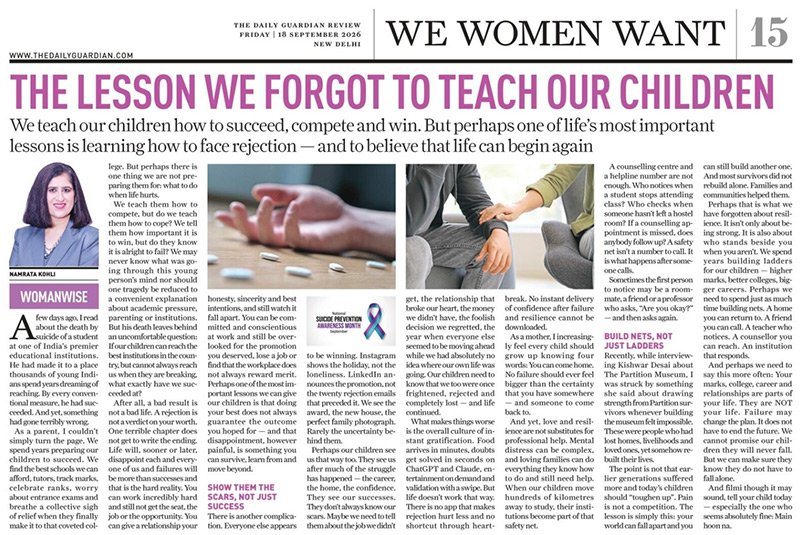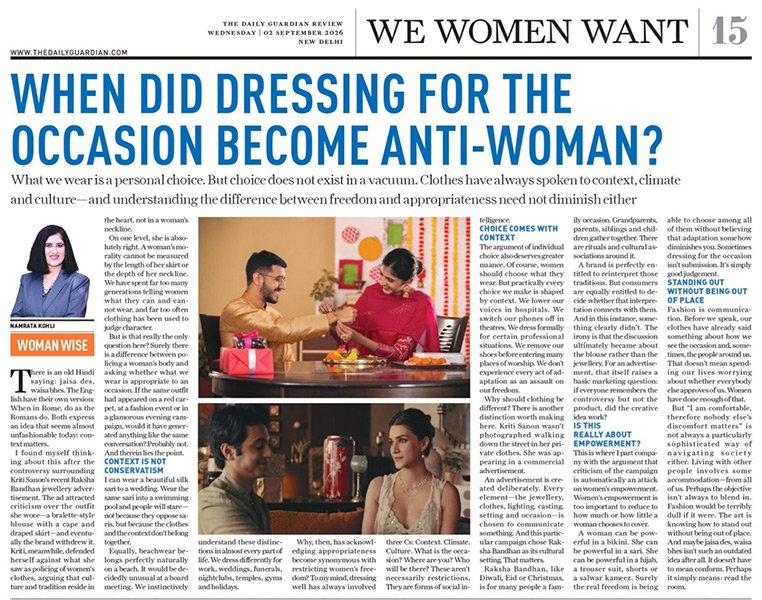
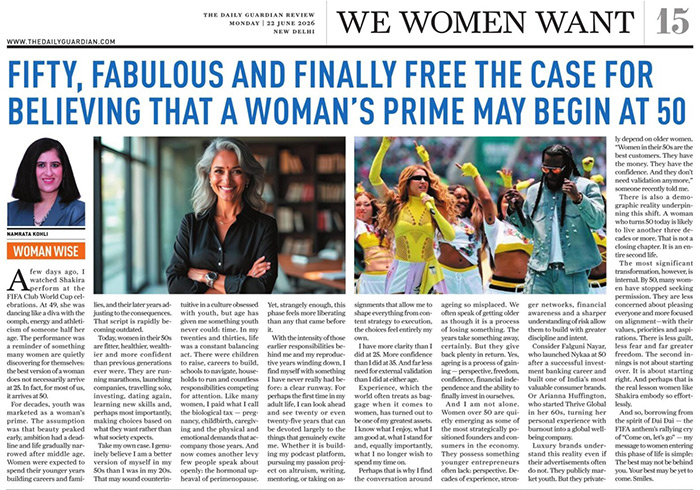
A few days ago, I watched Shakira perform at the FIFA Club World Cup celebrations. At 49, she was dancing like a diva with the oomph, energy and athleticism of someone half her age. The performance was a reminder of something many women are quietly discovering for themselves: the best version of a woman does not necessarily arrive at 25. In fact, for most of us, it arrives at 50.
For decades, youth was marketed as a woman’s prime. The assumption was that beauty peaked early, ambition had a deadline and life gradually narrowed after middle age. Women were expected to spend their younger years building careers and families, and their later years adjusting to the consequences. That script is rapidly becoming outdated.
Today, women in their 50s are fitter, healthier, wealthier and more confident than previous generations ever were. They are running marathons, launching companies, travelling solo, investing, dating again, learning new skills and, perhaps most importantly, making choices based on what they want rather than what society expects.
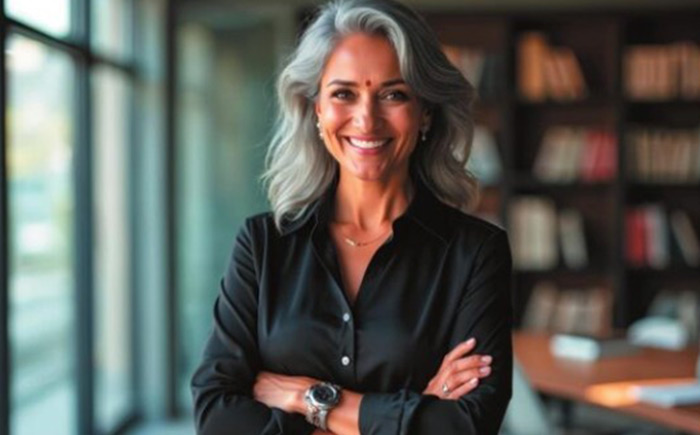
Take my own case. I genuinely believe I am a better version of myself in my 40s than I was in my 20s. That may sound counterintuitive in a culture obsessed with youth, but age has given me something youth never could: time. In my twenties and thirties, life was a constant balancing act. There were children to raise, careers to build, schools to navigate, households to run and countless responsibilities competing for attention. Like many women, I paid what I call the biological tax — pregnancy, childbirth, caregiving and the physical and emotional demands that accompany those years. And now comes another levy few people speak about openly: the hormonal upheaval of perimenopause. Yet, strangely enough, this phase feels more liberating than any that came before it.
With the intensity of those earlier responsibilities behind me and my reproductive years winding down, I find myself with something I have never really had before: a clear runway. For perhaps the first time in my adult life, I can look ahead and see twenty or even twenty-five years that can be devoted largely to the things that genuinely excite me. Whether it is building my podcast platform, pursuing my passion project on altruism, writing, mentoring, or taking on assignments that allow me to shape everything from content strategy to execution, the choices feel entirely my own.
I have more clarity than I did at 25. More confidence than I did at 35. And far less need for external validation than I did at either age.
Experience, which the world often treats as baggage when it comes to women, has turned out to be one of my greatest assets. I know what I enjoy, what I am good at, what I stand for and, equally importantly, what I no longer wish to spend my time on.
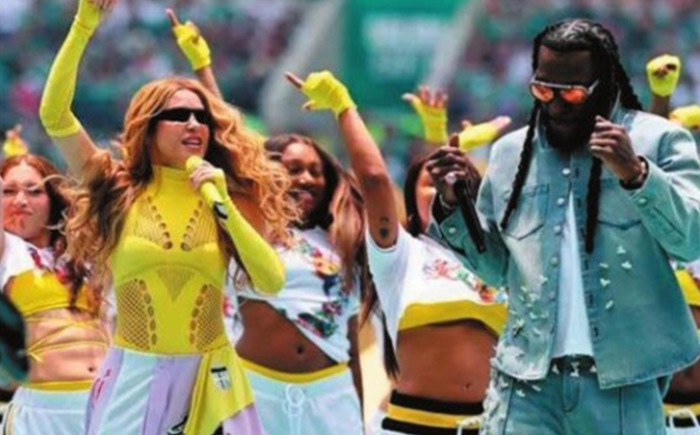
Perhaps that is why I find the conversation around ageing so misplaced. We often speak of getting older as though it is a process of losing something. The years take something away, certainly. But they give back plenty in return. Yes, ageing is a process of gaining — perspective, freedom, confidence, financial independence and the ability to finally invest in ourselves.
And I am not alone. Women over 50 are quietly emerging as some of the most strategically positioned founders and consumers in the economy. They possess something younger entrepreneurs often lack: perspective. Decades of experience, stronger networks, financial awareness and a sharper understanding of risk allow them to build with greater discipline and intent.
Consider Falguni Nayar, who launched Nykaa at 50 after a successful investment banking career and built one of India’s most valuable consumer brands. Or Arianna Huffington, who started Thrive Global in her 60s, turning her personal experience with burnout into a global wellbeing company.
Luxury brands understand this reality even if their advertisements often do not. They publicly market youth. But they privately depend on older women. “Women in their 50s are the best customers. They have the money. They have the confidence. And they don’t need validation anymore,” someone recently told me.
There is also a demographic reality underpinning this shift. A woman who turns 50 today is likely to live another three decades or more. That is not a closing chapter. It is an entire second life.
The most significant transformation, however, is internal. By 50, many women have stopped seeking permission. They are less concerned about pleasing everyone and more focused on alignment—with their values, priorities and aspirations. There is less guilt, less fear and far greater freedom. The second innings is not about starting over. It is about starting right. And perhaps that is the real lesson women like Shakira embody so effortlessly.
And so, borrowing from the spirit of Dai Dai — the FIFA anthem’s rallying cry of “Come on, let’s go” — my message to women entering this phase of life is simple: The best may not be behind you. Your best may be yet to come. Smiles😊