As Delhi-NCR battles winter pollution, experts explain whether air purifiers protect your lungs, how HEPA filters and CADR work, and what consumers should know about running costs and maintenance
Clean air has become the latest household expense as we increasingly pay for breathable air. Unlike most household appliances, air purifiers are being purchased not for comfort but to enable that most involuntary yet most critical activity: breathing.
As winter settles over the Delhi National Capital Region (Delhi-NCR), the familiar grey haze choking our throats has returned. Stubble burning in neighbouring states adds to pollution from vehicles, construction dust and other sources, such as a sudden spike after Diwali’s firecrackers. Falling temperatures, weak winds and atmospheric conditions that trap pollutants close to the ground make matters worse. Opening a window, once the simplest way to let in fresh air, now invites PM2.5 into the living room.
The consumer response has been swift. “Air purifier sales on Amazon.in have doubled in the last week,” says a spokesperson for the e-commerce platform. According to the company, shoppers are using Rufus, its personalised AI shopping assistant, to identify models based on room size, filter type and features such as live AQI sensors. The company has expanded its selection on Amazon Now, offering brands such as Philips, Honeywell and Eureka Forbes for delivery within minutes in more than 120 cities.
But buying an air purifier is one thing. Buying the right one is quite another. Does a more expensive machine necessarily clean the air better? Is one purifier enough for an entire home? And can it actually protect our lungs?
Cleaner air, yes, but what about healthier lungs?
The medical evidence is encouraging, although there are important qualifications. Dr Manav Manchanda, director (Respiratory and Sleep Medicine), Asian Hospital, says air purifiers can meaningfully improve indoor air quality, particularly where outdoor pollution remains high. “There is credible clinical evidence that portable HEPA air purifiers can reduce indoor concentrations of fine particulate matter, including PM2.5, which can penetrate deep into the lungs,” he said.
Some studies have reported improvements in asthma symptoms and peak flow readings, particularly among children and people with existing respiratory conditions.
Dr Neetu Jain, senior consultant (Pulmonology, Critical Care and Sleep Medicine) at PSRI Hospital, makes an important distinction. “We must distinguish between reducing exposure and preventing disease,” she says. Fine particulate matter can contribute to airway inflammation and worsen respiratory conditions. Reducing indoor pollution may benefit certain patients, particularly those with asthma and allergies. However, long-term evidence that household purifiers prevent chronic respiratory diseases remains insufficient.
An air purifier is therefore an additional layer of protection, not a medical treatment or guarantee against respiratory disease. Nor can it undo pollution exposure accumulated during commutes and other outdoor activities.
HEPA, CADR and the science behind the sales pitch
Buying an air purifier can feel like sitting for a science examination. There is HEPA, H13, CADR, activated carbon, ionisers, UV-C and an assortment of smart sensors.
Fortunately, a few specifications matter far more than the rest. Start with the filter. HEPA, which stands for high-efficiency particulate air, filters capture fine airborne particles.
Dr Manchanda points out that a genuine HEPA filter is designed to capture at least 99.97 per cent of particles measuring 0.3 microns under standard testing conditions. H13 is another recognised high-efficiency classification, with its own testing standard. Consumers should distinguish between certified filters and vaguely advertised ‘HEPA-type’ technology.
But an excellent filter alone does not guarantee an excellent purifier. This is where CADR (Clean Air Delivery Rate) becomes important. It indicates how quickly a machine delivers filtered air. “A purifier with a highly efficient filter but inadequate CADR for the room may not provide the expected benefit,” explains Dr Jain.
A machine designed for a small bedroom may struggle in a large living room, irrespective of how sophisticated it looks. Room dimensions, ceiling height and usage patterns should determine the choice.
Activated carbon helps reduce certain gases and odours but does not replace HEPA filtration for fine particles. UV-C systems primarily target microorganisms rather than PM2.5. Some ionisers and electrostatic devices may generate ozone, which can irritate the respiratory tract. Smart displays and live air-quality readings may be useful, but a colourful screen is not proof that an entire room is adequately protected.
The takeaway? More features do not necessarily mean cleaner air.
A purifier for each room or one for the entire home?
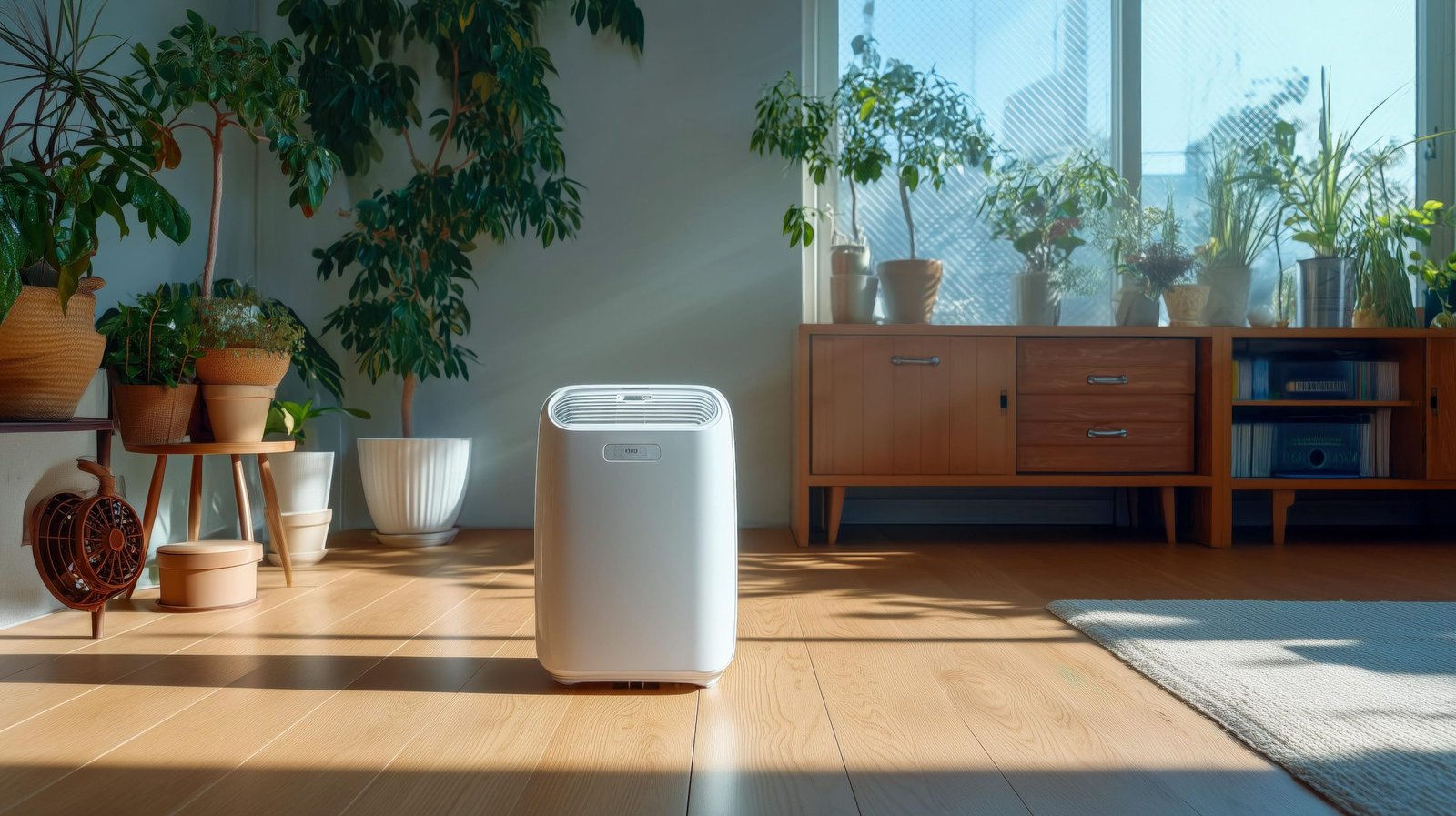
Most conventional air purifiers recirculate and filter air within a particular room. They work best when appropriately sized and when polluted outdoor air is not constantly entering through open doors and windows.
But conventional room purifiers do not introduce fresh air. In a poorly ventilated bedroom, carbon dioxide can accumulate even while particulate pollution falls.
Rohan Chopra, co-founder and managing director of aqi0, believes this is an important limitation. “A room purifier recirculates the air of one closed room. It cannot bring in fresh air, so you need one per room and CO₂ still builds up overnight with the windows shut,” he says.
His company offers a whole-home positive-pressure fresh-air system. It draws outdoor air through a washable pre-filter and three H13 HEPA filters before supplying it indoors. According to Chopra, the system delivers approximately 500 cubic metres of air per hour and can serve homes of up to 2,000 square feet, depending on their layout. “We treat air the way Indian homes already treat drinking water, clean it at the source, before it reaches the family,” he says.
The system maintains slightly higher indoor air pressure to reduce the entry of unfiltered air while allowing stale air to escape. The company claims that, with doors and windows closed and filters maintained, indoor PM2.5 can remain below 15 micrograms per cubic metre and CO₂ below 1,000 parts per million.
Fresh air versus filtered air
Companies such as YOGa Clean Air are also exploring alternatives to conventional room purifiers. Its Clean Air Bubble system supplies filtered outdoor air rather than simply recirculating indoor air.
Delhi-based entrepreneur Raj Singh Bhandal says he has been tracking Delhi’s deteriorating air quality for over a decade. Having tried two generations of conventional purifiers with limited success, he says his experience with YOGa has been different.
“I’ve been pretty amazed by the consistency,” he says, referring to particulate levels he had previously struggled to achieve. Equally surprising was his discovery of the importance of indoor CO₂ levels, something he admits he had never considered earlier. His experience highlights an overlooked distinction. A room can have low particulate pollution and still be inadequately ventilated.
What does clean air cost?
An air purifier is one of those purchases where the price tag tells only part of the story. There is the initial investment, followed by replacement filters, electricity and servicing.
For instance, aqi0’s whole-home system costs Rs 85,000, with installation charged separately. Its optional annual maintenance plan costs Rs 15,000, including filter replacements, cleaning and servicing. The company says renewals increase by 8 per cent annually. Electricity consumption is estimated at Rs 170 a month for continuous operation. An optional Wi-Fi air-quality monitor costs another Rs 4,000. That puts first-year expenditure at approximately Rs 1.02 lakh, excluding installation and optional accessories.
Chopra estimates that four conventional purifiers for a three-bedroom home could cost Rs 1.2 lakh or more before filter replacements. However, this is a company estimate, not a standard market benchmark. Conventional purifiers are available across a wide range of prices and capacities.
The more useful comparison is the total cost over several years. A relatively inexpensive purifier may require costly replacement filters. A premium model may offer greater capacity but higher maintenance expenses. And a machine whose filters are unavailable when needed is hardly a bargain.
Consumers should check warranty coverage, after-sales service and filter availability. Some machines have washable pre-filters, but their main HEPA filters generally require replacement. The relevant question is not merely what the purifier costs to purchase, but what it costs to keep the air clean.
Where should you place your air purifier?
Does every home need an expensive whole-house solution? Not necessarily. Dr Manchanda recommends using purifiers consistently in frequently occupied rooms, particularly bedrooms, where people spend several uninterrupted hours.
For a family on a limited budget, one appropriately sized bedroom purifier may be more useful than several undersized machines scattered around the house. Placement matters too. A purifier squeezed behind furniture or obstructed by curtains may not circulate air effectively.
Maintenance is equally important. “An overloaded filter, poor maintenance or compromised seals can reduce the actual performance of the equipment,” says Dr Jain. Consumers should also remember that permanently shutting windows is not a complete solution. Adequate ventilation remains necessary, although timing matters when outdoor pollution is severe. Reducing indoor smoke, cooking emissions and other pollution sources is equally important.
Five things to check before you buy:
- HEPA filtration: Look for genuine filters and verified performance.
- CADR and room size: Match cleaning capacity to room dimensions.
- Running costs: Compare replacement filters, electricity and servicing.
- Ozone safety: Avoid ozone-generating technologies.
- Maintenance: Check filter availability and prioritise frequently occupied rooms.