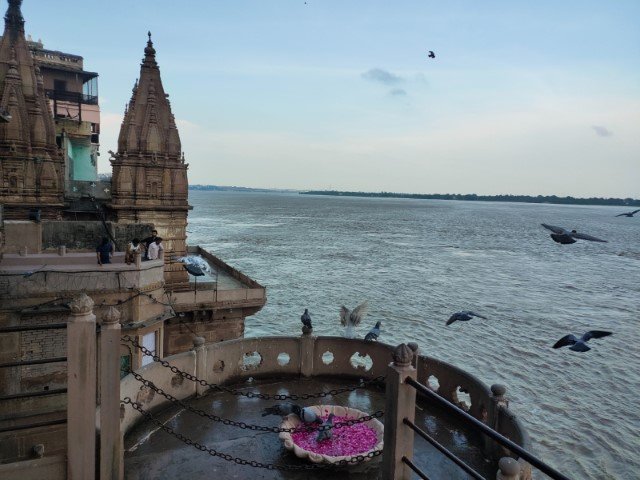
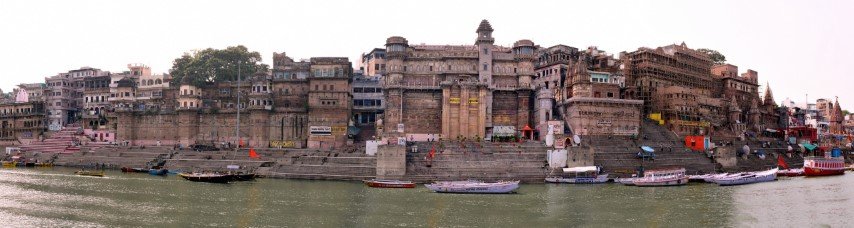
From 200-year-old architectural details to a contemporary vegetarian tasting menu, BrijRama Palace in Varanasi brings together art, conservation and cuisine. Namrata Kohli speaks with Manish Singh, General Manager, BrijRama Palace, about preserving the past while creating new experiences for today’s travellers.
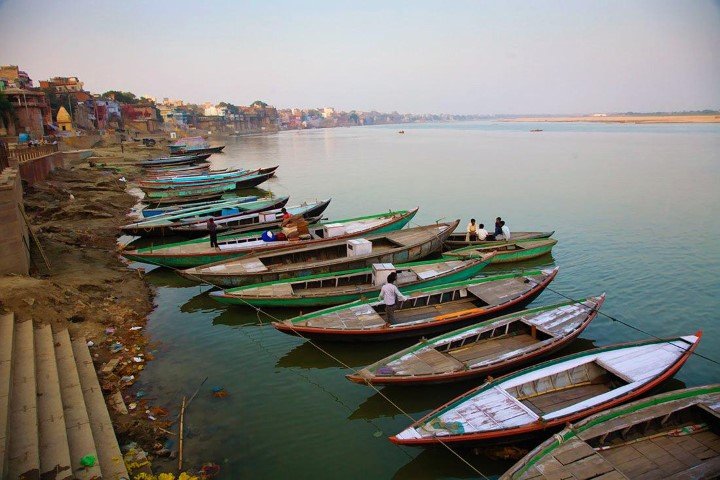
Perched on the banks of the Ganga, BrijRama Palace is one of Varanasi’s distinctive heritage hotels. Originally built in 1812 by Shridhara Narayana Munshi, associated with the Nagpur estate, the palace later passed into the hands of Maharaja Rameshwar Singh Bahadur of Darbhanga in 1915. Its architecture reflects these successive chapters, bringing together Maratha sandstone craftsmanship, floral carvings and Greco-Roman influences.
Today, the restored palace is more than a place to stay. Its historic interiors offer a window into the city’s artistic past, while its restaurants explore Banaras through food, including a contemporary 10-course vegetarian tasting menu at Aangan.
“At BrijRama Palace, heritage is not confined to objects behind glass. It survives in the stonework, the stories and increasingly, on the plate. The challenge is to ensure that while the presentation evolves, the identity of Banaras remains intact,” shares Manish Singh, General Manager, BrijRama Palace, Varanasi in an exclusive conversation with Namrata Kohli
Q. What are some of the oldest and most significant artistic features preserved at BrijRama Palace?
BrijRama Palace is itself a living repository of Varanasi’s artistic and architectural heritage. Several elements date back to its earlier royal occupants, including original carved stone details, Greco-Roman-inspired sculptures and decorative motifs.
The palace retains its distinctive Maratha architectural character through carved sandstone pillars, floral and betel-leaf motifs, semicircular bastions and intricate stonework. These are not merely decorative features. They are part of the palace’s history.
Q. How much of what guests see today is original to the palace, particularly from its Maratha and Darbhanga periods?
A significant part of what guests see is connected to the building’s earlier history rather than being acquired during restoration. The original palace was built in 1812 by Shridhara Narayana Munshi, and its Maratha architectural character survives in the sandstone pillars, carved motifs, bastions and stonework.
A second important chapter began in 1915, when Maharaja Rameshwar Singh Bahadur of Darbhanga acquired the property. This period introduced Greco-Roman influences, including sculptures and river-dolphin carvings. An additional floor was also constructed.
BrijRama Palace is therefore best understood as a layered heritage property, combining its original Maratha structure, the additions of the Darbhanga period and the conservation work that has brought these elements back to life.
Q. Do today’s guests, particularly younger travellers, show an interest in the palace’s art and architectural history?
Absolutely. Guests frequently pause to admire the frescoes, mirrorwork, sculptures and carved stone details. They often ask our team about their history and significance.
What is particularly encouraging is that this curiosity is not limited to people who are already interested in art or history. Younger travellers are increasingly drawn to the stories behind these features. For them, the appeal often goes beyond the object itself. They want to understand who created it, why it was made and how it connects to the palace’s past.
Q. Preserving historic art in a functioning luxury hotel must be challenging. What does conservation involve?
Maintaining a heritage palace requires a very different approach from maintaining a contemporary hotel. Humidity, moisture, temperature fluctuations and sunlight can affect frescoes, mirrorwork, wood, stone and other traditional materials. Even routine cleaning must be handled carefully because historic surfaces cannot always be treated like modern finishes.
Traditional craftsmanship is especially important. Specialist artisans may be needed to restore frescoes, mirrorwork or stone detailing, using techniques appropriate to the original materials. The greatest challenge is balancing conservation with hospitality.
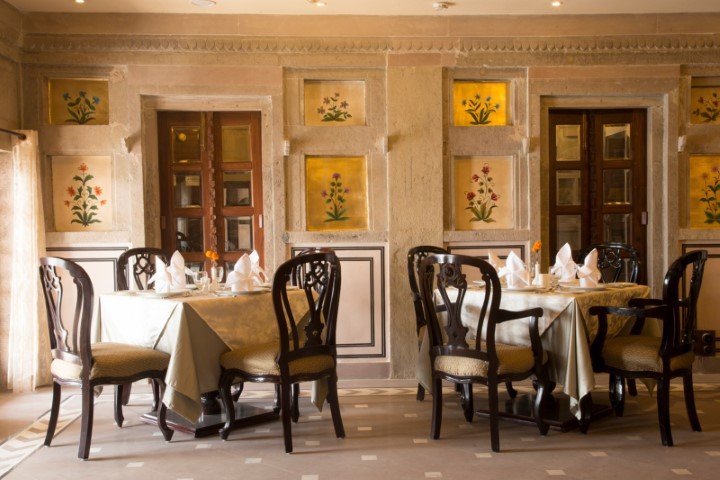
BrijRama Palace is not a museum. It is a living palace where guests stay, dine, celebrate and move through historic spaces every day. Our guiding principle is to preserve what is original, intervene only when necessary and ensure that restoration respects the craftsmanship and character of the palace
Q. Banarasi food is traditionally associated with its streets, homes and halwai shops. How do you bring those flavours into a contemporary fine-dining experience?
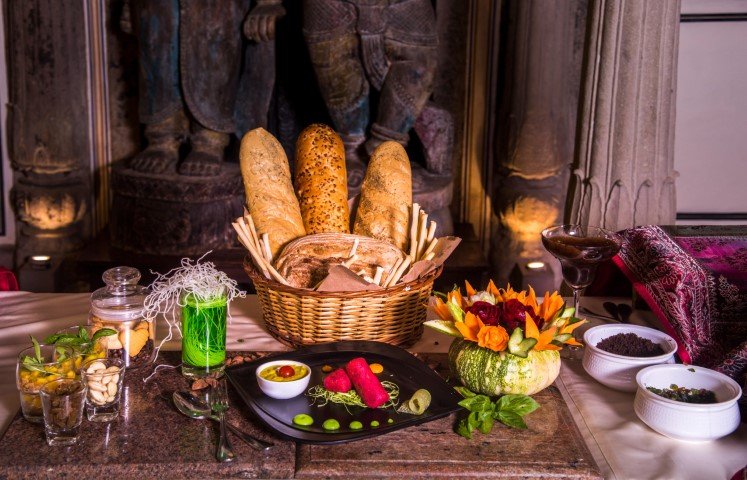
Our menu draws deeply from Varanasi’s culinary traditions while reinterpreting familiar flavours through a contemporary tasting menu. One example is Echoes of Heritage, which brings together two regional influences. We take inspiration from Bhutte Ki Kees, reflecting Munshi Ji’s roots in Nagpur, and combine it with the flavours of Varanasi’s famous Tamatar Ki Chaat.
The dish is presented on a stone slab, referencing the palace’s Greco-Roman architectural influences. It includes a floral papad shaped like a tulip, flavoured with kalaunji and fennel, alongside charred cherry tomatoes and fresh coriander.
Another course, Winter Treasures, celebrates Malliyo, Varanasi’s delicate winter speciality. We reinterpret it as a light saffron preparation, accompanied by kesar gel and crisp pistachio and almond tuile. The idea is not simply to reproduce traditional recipes but to preserve their memories while presenting them in a new context.
Q. Which traditional ingredients and techniques are particularly important to your kitchen?
One ingredient that fascinates us is the humble yellow mustard seed. We lightly pickle it to create a gentle, lingering sensation on the palate. Visually, it resembles caviar, offering an interesting contrast between an everyday Indian ingredient and the idea of luxury.
We also have our signature Roghan Powder, a spice blend developed specifically for our kitchen. It lends an earthy, smoky depth to dishes. In The Royal Reverie, we use applewood smoking to introduce rustic, aromatic notes. For Winter Treasures, we use a siphon technique to create a delicate saffron spuma inspired by Malliyo. These techniques allow us to retain the essence of traditional ingredients while giving them a contemporary expression.
Q. Which dishes at Aangan best capture the philosophy of the restaurant?
Rather than identifying one signature dish, we see each course as part of a larger story. However, two are particularly meaningful.
The first is Celestial Guardian. It features a savoury Achappam biscuit shaped like a Kalachakra, filled with a savoury preparation and accompanied by peas, curry leaf and delicate drops of chutney. Leafy greens are arranged to evoke the Libra constellation. The dish is dedicated to Sridhar Narayan Munshi Ji, the first guardian of the palace.
The second is Threads of Sweetness, a dessert inspired by Mexican Tres Leches and Indian Rasmalai. It combines international technique with familiar Indian flavours. It is dedicated to Arvind Kumar Ji, whom we regard as the palace’s third guardian, continuing its story through a contemporary vision. Both dishes are about more than flavour. They create an edible narrative around the palace and the people associated with its journey.
Q. Luxury dining is often associated with expensive ingredients. What does luxury mean when the cuisine is entirely vegetarian?
For us, luxury is not defined simply by the price of an ingredient. It is about thought, precision, time and the depth of the experience.
Our 10-course vegetarian tasting menu has been developed through extensive research, experimentation and refinement. We consider every element, from ingredients and techniques to presentation, sequencing and storytelling.
We do use premium ingredients such as morels, but the real luxury lies in craftsmanship and attention to detail. Each course connects with the palace’s history, architecture, guardians or regional culinary traditions. At Aangan, luxury is about discovery and storytelling rather than extravagance alone.
Q. What surprises international guests most about Banarasi cuisine and your vegetarian tasting menu?
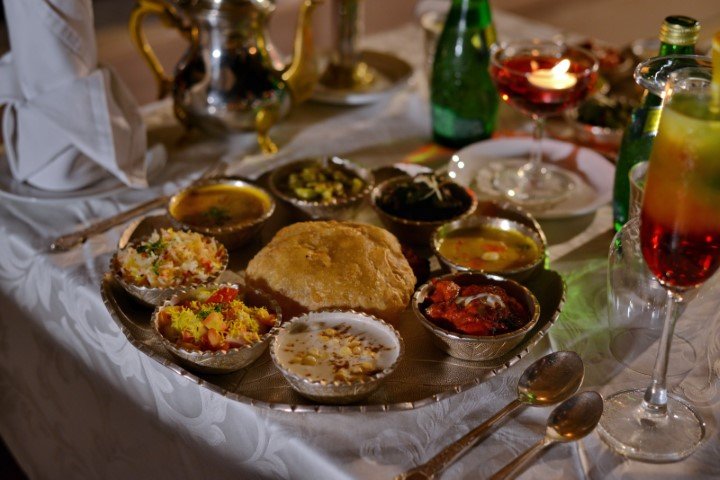
Many international guests are surprised by the depth, variety and sophistication possible within an entirely vegetarian menu. Some arrive expecting familiar Indian curries, breads, lentils and vegetable preparations. Instead, they experience ten courses with different textures, temperatures, techniques and presentations.
They are particularly intrigued when familiar Indian ingredients such as mustard, regional spices and preparations like Tamatar Ki Chaat or Malliyo appear in unexpected forms. Varanasi is often introduced to visitors through its chaat, kachori, lassi and sweets. But its culinary identity is much broader.
At Aangan, we try to reveal another side of Banarasi cuisine, one rooted in regional memories and traditional flavours but expressed through contemporary fine dining. Ultimately, what surprises guests is that vegetarian Indian cuisine can be every bit as intricate and experiential as any other fine-dining tradition.