We teach our children how to succeed, compete and win. But perhaps one of life’s most important lessons is learning how to face rejection — and to believe that life can begin again
A few days ago, I read about the death by suicide of a student at one of India’s premier educational institutions. He had made it to a place thousands of young Indians spend years dreaming of reaching. By every conventional measure, he had succeeded. And yet, something had gone terribly wrong.
As a parent, I couldn’t simply turn the page. We spend years preparing our children to succeed. We find the best schools we can afford, tutors, track marks, celebrate ranks, worry about entrance exams and breathe a collective sigh of relief when they finally make it to that coveted college. But perhaps there is one thing we are not preparing them for: what to do when life hurts.
We teach them how to compete, but do we teach them how to cope? We tell them how important it is to win, but do they know it is alright to fail? We may never know what was going through this young person’s mind nor should one tragedy be reduced to a convenient explanation about academic pressure, parenting or institutions. But his death leaves behind an uncomfortable question: If our children can reach the best institutions in the country, but cannot always reach us when they are breaking, what exactly have we succeeded at?
After all, a bad result is not a bad life. A rejection is not a verdict on your worth. One terrible chapter does not get to write the ending. Life will, sooner or later, disappoint each and everyone of us and failures will be more than successes and that is the hard reality. You can work incredibly hard and still not get the seat, the job or the opportunity. You can give a relationship your honesty, sincerity and best intentions, and still watch it fall apart. You can be committed and conscientious at work and still be overlooked for the promotion you deserved, lose a job or find that the workplace does not always reward merit. Perhaps one of the most important lessons we can give our children is that doing your best does not always guarantee the outcome you hoped for — and that disappointment, however painful, is something you can survive, learn from and move beyond.
Show Them The Scars, Not Just Success
There is another complication. Everyone else appears to be winning. Instagram shows the holiday, not the loneliness. LinkedIn announces the promotion, not the twenty rejection emails that preceded it. We see the award, the new house, the perfect family photograph. Rarely the uncertainty behind them.
Perhaps our children see us that way too. They see us after much of the struggle has happened — the career, the home, the confidence. They see our successes. They don’t always know our scars. Maybe we need to tell them about the job we didn’t get, the relationship that broke our heart, the money we didn’t have, the foolish decision we regretted, the year when everyone else seemed to be moving ahead while we had absolutely no idea where our own life was going. Our children need to know that we too were once frightened, rejected and completely lost — and life continued.
What makes things worse is the overall culture of instant gratification. Food arrives in minutes, doubts get solved in seconds on ChatGPT and Claude, entertainment on demand and validation with a swipe. But life doesn’t work that way. There is no app that makes rejection hurt less and no shortcut through heartbreak. No instant delivery of confidence after failure and resilience cannot be downloaded.
As a mother, I increasingly feel every child should grow up knowing four words: You can come home. No failure should ever feel bigger than the certainty that you have somewhere — and someone to come back to.
And yet, love and resilience are not substitutes for professional help. Mental distress can be complex, and loving families can do everything they know how to do and still need help. When our children move hundreds of kilometres away to study, their institutions become part of that safety net.
A counselling centre and a helpline number are not enough. Who notices when a student stops attending class? Who checks when someone hasn’t left a hostel room? If a counselling appointment is missed, does anybody follow up? A safety net isn’t a number to call. It is what happens after someone calls.
Sometimes the first person to notice may be a roommate, a friend or a professor who asks, “Are you okay?” — and then asks again.
Build Nets, Not Just Ladders
Recently, while interviewing Kishwar Desai about The Partition Museum, I was struck by something she said about drawing strength from Partition survivors whenever building the museum felt impossible. These were people who had lost homes, livelihoods and loved ones, yet somehow rebuilt their lives.
The point is not that earlier generations suffered more and today’s children should “toughen up”. Pain is not a competition. The lesson is simply this: your world can fall apart and you can still build another one. And most survivors did not rebuild alone. Families and communities helped them.
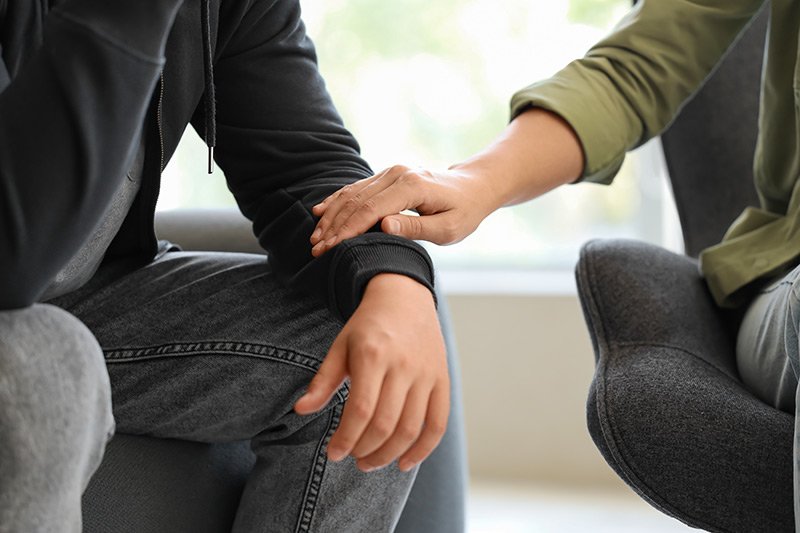
Perhaps that is what we have forgotten about resilience. It isn’t only about being strong. It is also about who stands beside you when you aren’t. We spend years building ladders for our children — higher marks, better colleges, bigger careers. Perhaps we need to spend just as much time building nets. A home you can return to. A friend you can call. A teacher who notices. A counsellor you can reach. An institution that responds.
And perhaps we need to say this more often: Your marks, college, career and relationships are parts of your life. They are NOT your life. Failure may change the plan. It does not have to end the future. We cannot promise our children they will never fall. But we can make sure they know they do not have to fall alone.
And filmi though it may sound, tell your child today — especially the one who seems absolutely fine: Main hoon na.