An empty nest isn’t just about children moving away. It’s about a mother rebuilding her life after spending decades building theirs
Next year is going to be one of the biggest years of my life. My son will graduate from IIT Delhi with a degree in Biotechnology Engineering. His dream is research, which means the next chapter will probably take him to the United States or Europe. My daughter will finish school. She has worked incredibly hard for the JEE, consistently topping her class, and, God willing, should fulfil her dream of making to a good engineering college. Around the same time, my husband and I will move into a beautiful apartment overlooking a golf course- four bedrooms, sunlit balconies. A home we have dreamt about for years.
Everything, on paper, looks perfect. And yet, there are days when I wonder if I will even want to walk into that house. Because by then, it may no longer be filled with the people who made it a home. That thought sits somewhere deep inside me.
People don’t talk enough about the emotional contradiction of this phase of life. It even has a name—Empty Nest Syndrome. Our mothers went through it when we left home. Now, it is our turn. I know I am not the first woman to experience it, and I certainly won’t be the last.
Life is strange. Sometimes it gives you exactly what you wished for, just not in the way you imagined. People often say, “But this is what you’ve worked for.” They’re right. Of course I wanted my children to study well, get into good colleges and chase their dreams, wherever those dreams take them. So why is letting them go so difficult?

Maybe because motherhood quietly becomes your identity without you even noticing. For nearly two decades, our lives revolve around our children. School timings become our timings. Exams become our exams. Their friends become familiar names in our homes. The cups of tea after coaching classes. The late-night conversations. Endless gossip about teachers, cousins and classmates. Their laughter drifting out of their rooms. Even the arguments over messy cupboards. Without realising it, their presence becomes the rhythm of our everyday life.
During the JEE preparation, both my children spent long hours studying at home. Somewhere along the way, simply seeing them around became normal. I never consciously appreciated it because I assumed it would always be there. Now I find myself counting those ordinary moments because ordinary moments are often the ones we miss the most.
Perhaps what makes this stage even harder is that it arrives alongside another transition. Most of us women experience an empty nest at exactly the time they are navigating perimenopause and menopause. Your body is changing. Your emotions are changing. Your children are leaving. Your parents are ageing. Everyone tells you to be strong. Some days, you are and some days, you’re not.
There are moments when you wonder: Will life ever feel the same again? Will we ever sit together over endless cups of tea discussing everything and nothing? Will they still call just to complain about a teacher or tell me about a fight with a friend? Or is this how life quietly changes without asking for permission?
Everything seems to shift at once. No wonder so many women describe this period as emotionally overwhelming. Sometimes I ask myself uncomfortable questions- Is this the beginning of a long goodbye? First comes college, then higher studies, then careers, then marriage. And suddenly you realise your children are no longer building their lives around you. They are building lives of their own. It is exactly as it should be. That doesn’t make it easy.
Whenever these thoughts overwhelm me, I think of friends whose children left years ago. I remember how devastated they were. They cried and wandered around silent homes wondering what to do with so much empty time.
Today, they are traveling, working, rediscovering old passions, laughing again and telling me, “You will be okay too.” I hold on to those words. Because motherhood, perhaps more than any other role, teaches us one lesson again and again- Love is not possession. Love is preparation. We spend twenty years preparing our children for a life that eventually won’t include us every single day. Our success as parents is measured not by how long they stay, but by how confidently they leave.
Slowly, I am trying to convince myself that being their greatest well-wisher also means not standing in the way of their dreams. If they are meant to build companies, families or lives in another city—or another continent—my job is not to hold them back. My job is to cheer the loudest, even if I cry quietly afterwards.
Perhaps every stage of life asks us to discover a new purpose. When we are young, we build careers. Then we build families. Then we raise children. And when they leave, life asks another question. Who are you now? Maybe the answer isn’t waiting to be found. Maybe it has to be created.
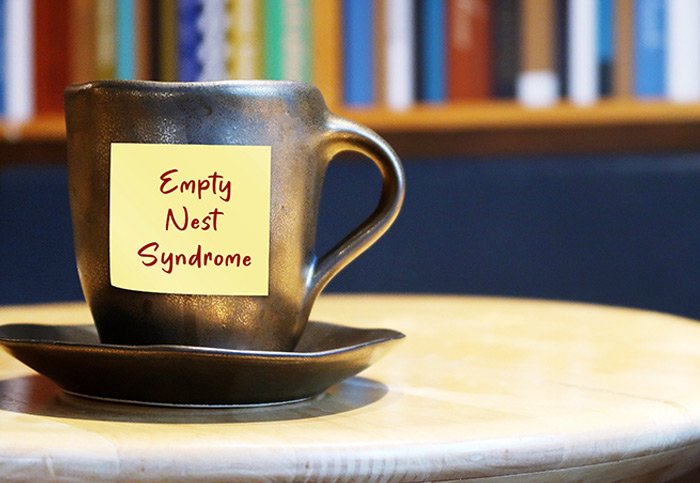
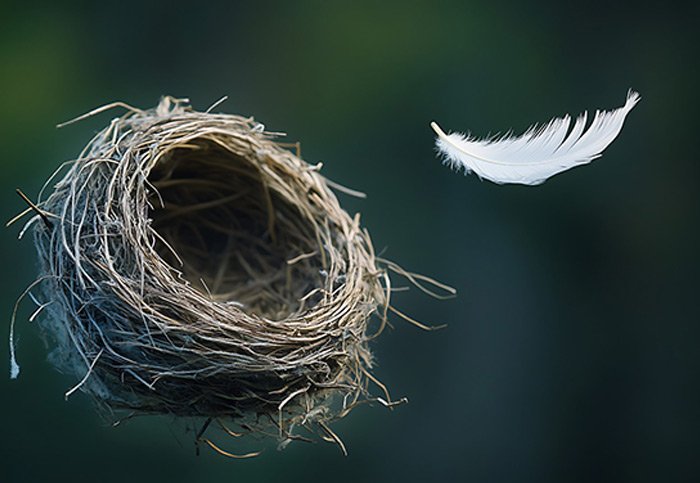
The nest may become quieter. But perhaps it doesn’t have to become empty. Maybe it is time to fill it with friendships we postponed, books we never finished, places we never visited, conversations with our spouses that were interrupted by school runs, and dreams we quietly placed on hold while raising our children. So perhaps this is our season too- a season to become whole not just as mothers, but as women.
I don’t know exactly what next year will feel like. I know there will be tears. But I also know there will be immense pride. If we want our children to grow, we must learn to let go. As Kahlil Gibran so beautifully wrote, “Your children are not your children… They come through you but not from you.”
Perhaps motherhood is, in the end, the art of preparing our children for a life beyond us. The house may become “quieter”, but our hearts will become “fuller” as we watch them walk into the world with confidence, courage and dreams of their own. After all, the greatest reward of parenting is not that our children stay. It is that they leave with the confidence to soar—and always know the way back home.