Want an authentic Bengali feast, a Middle Eastern mezze spread, or a sushi dinner without stepping out or having to scroll through an endless list of restaurants with no clue what the dish will be like? Wealthy Indians have found a way around that conundrum.
Increasingly, the well-heeled crowd is inviting home chefs and private dining specialists to bring customised culinary experiences into their kitchens. From anniversary dinners and milestone birthdays to wellness-focused family gatherings, private chefs are emerging as one of luxury’s newest status symbols. With personalised menus and restaurant-quality food, they offer the exclusivity of a bespoke dining experience without stepping outside the front door.
Social media, meanwhile, has enabled chefs to build direct relationships with clients and showcase their work. The trend also reflects changing patterns of entertainment. Rather than hosting large banquet-style gatherings, many affluent families now prefer smaller, more intimate experiences centred around food, conversation and personalisation.
Instead of fighting for reservations at the city’s hottest restaurant, many people opt to bring the restaurant home. When South Delhi resident Anamika Sharma hosted her ‘milestone’ 40th birthday gathering for 20 guests, she opted to hire a private chef through a chef-booking platform rather than reserve a restaurant. “From booking to the last dish, everything was seamless. The chef arrived on time, the food was incredible, and my guests kept asking how I pulled it off. It made me look like a rockstar host,” she says.
Similarly, Gurugram-based Manmeet Malhotra hired a chef for a 30-guest anniversary dinner. “I was sceptical initially because hiring a chef online felt risky. But the reviews, verification process and transparent pricing gave me confidence. It turned out to be one of the best experiences we have had at home.”
The trend reflects a broader shift towards personalised experiences. Much like private fitness trainers and bespoke travel planners, affluent consumers are increasingly willing to pay for customised dining experiences built around their tastes, dietary preferences and guest lists.
Who are private chefs and why are they becoming popular?
Unlike home chefs who typically prepare food from their own kitchens, private chefs are professionally trained culinary specialists who travel to a client’s home and cook on-site. Many have worked at luxury hotels, fine-dining restaurants, cruise lines or even celebrity households. Some come with teams that handle everything from procurement and preparation to plating and service.
The appeal lies in exclusivity. Guests interact directly with the chef, menus are customised, ingredients are sourced according to preference, and the entire experience feels more intimate than dining in a restaurant.
Take the case of Chef Narendra Mehto, trained at Jaypee Vasant Continental in Vasant Vihar, who has spent years perfecting a range of cuisines that today cater to house parties, family gatherings and celebrations across Delhi-NCR. His menus span Indian, Chinese, Continental and South Indian cuisines, with dishes prepared fresh and served hot at the venue. South Indian and Chinese fare remain among the most requested options, reflecting the popularity of regional and Asian cuisines at home.
A typical spread may include diverse starters such as paneer tikka, dahi bhalla, chaat papri, spring rolls and momos, followed by elaborate main courses featuring Indian, Chinese or multi-cuisine combinations. Certain ingredients such as coloured capsicums, broccoli and speciality sauces can push up costs, particularly for Chinese and Continental preparations, says Mehto.
Health-conscious consumers are also influencing menus. “People increasingly ask for less oil, lighter preparations and more vegetables,” says Mehto. Soybean oil is commonly used for cooking, while menus can be adjusted according to dietary preferences and health requirements.
While food trends come and go, Mehto believes the attraction of private dining lies in freshness and customisation. Unlike restaurant deliveries, meals are prepared on-site and can be tailored to suit the tastes of the host and guests, making every gathering a more personalised experience.
What services do private chefs typically provide?
While private chefs bring restaurant-quality cooking into the home, they are not the same as caterers. Most chef-at-home services focus on menu planning, food preparation and cooking, leaving service and post-event clean-up to the host.
For example, one chef-booking platform charges a base fee of Rs 4,500 for up to 15 guests and up to 10 dishes. Beyond that, additional guests cost Rs 100 per person, while extra dishes are charged at Rs 200 each. A booking confirmation fee of Rs 1,999 is paid upfront, with the balance settled directly with the chef on the day of the event. The chef typically arrives around three hours before serving time, works within the client’s kitchen and prepares the agreed menu. However, guests expecting restaurant-style service may be surprised to learn what is not included.
There are certain things a private chef will definitely not do. Private chefs generally do not serve food to individual guests, plate dishes tableside, wash utensils after the event, provide crockery, cutlery or serving platters, or procure ingredients unless specifically agreed upon. Instead, the chef usually lays out the prepared dishes buffet-style in serving bowls, allowing guests to help themselves. Hosts are responsible for arranging crockery, cutlery and post-event cleaning. “The chef’s role is to curate the menu and cook the meal. It is not a catering service with waiters and housekeeping staff,” says an industry player.
The model appeals to consumers who want freshly cooked food and personalised menus without the higher costs associated with full-scale catering. It also offers flexibility. Menus can be customised around dietary preferences, including Jain, diabetic-friendly, gluten-free, keto and high-protein requirements. The arrangement works particularly well for intimate dinners, family celebrations and house parties where guests value interaction with the chef and freshly prepared food over formal service.
How are curated food brands tapping into bespoke dining demand?
Not all chef-led dining experiences involve chefs cooking inside your home. Entrepreneurs like Ramola Bachchan are tapping into growing demand for personalised, restaurant-quality food delivered to customers’ doorsteps.
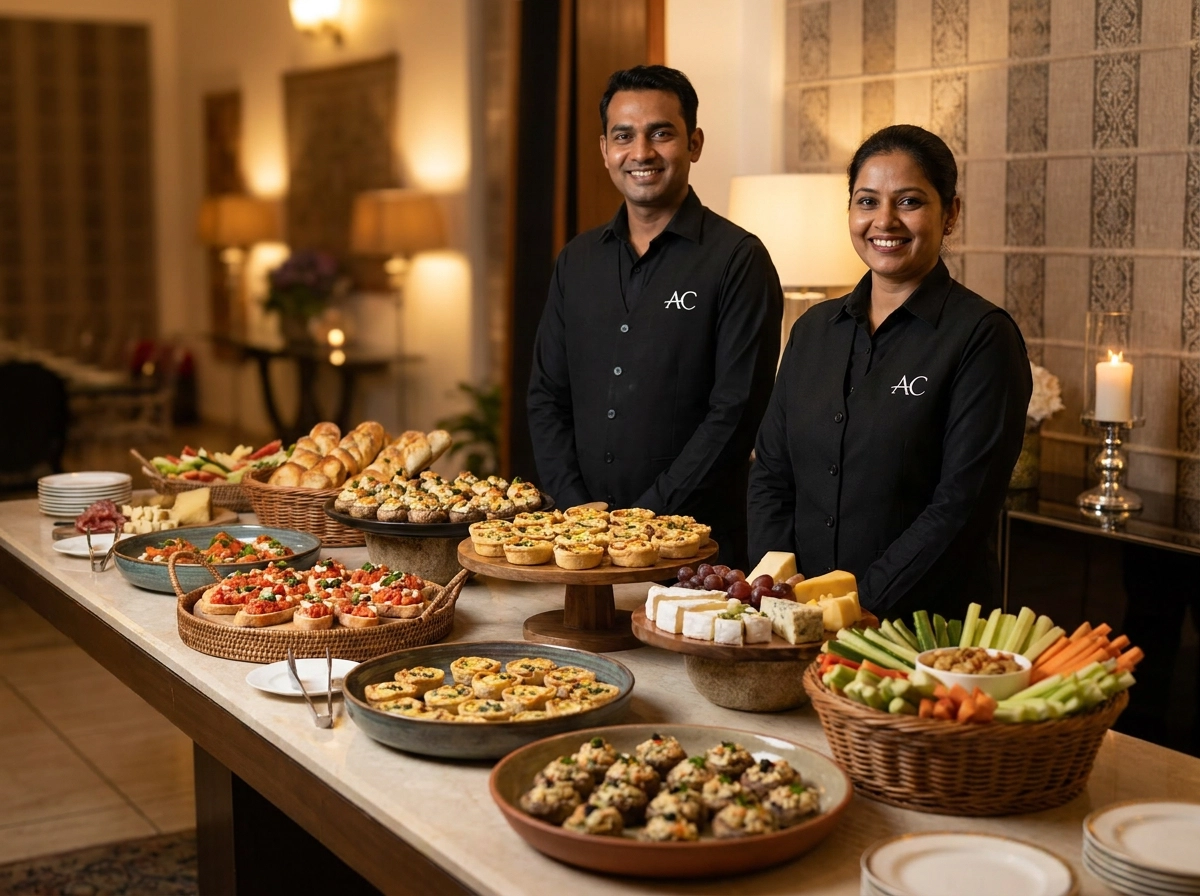
Bachchan launched Accidental Chef in 2020, offering curated menus spanning Eastern Mediterranean, Japanese, Thai, Southeast Asian, Italian and European cuisines, along with desserts and cakes. Unlike private chefs who cook on-site, her team prepares meals under her supervision and delivers them across Delhi-NCR. “People want restaurant standards with the comfort and trust of home-cooked food,” says Bachchan.
Among her most popular offerings is the Mezze Basket, a Mediterranean spread priced at around Rs 4,000 for a medium platter, Rs 6,000 for a large platter and Rs 7,000 for an extra-large version. Sushi, Middle Eastern and Southeast Asian dishes are also in strong demand.
Orders are placed at least a day in advance, allowing fresh ingredients and premium products to be sourced. “I always personally deliver the food,” says Bachchan. The service caters to everything from intimate dinners for two to gatherings of up to 60 guests, with menus customised to dietary preferences and tastes.
Why are luxury hotels taking five-star dining into private homes?
The trend is not limited to independent chefs. At the very top end of the market, luxury hotels and hospitality groups are increasingly being approached to recreate five-star dining experiences inside private residences, farmhouses and holiday homes.
However, unlike traditional outdoor catering, these assignments are undertaken selectively. “We do private catering selectively. We don’t do mass volumes because that can compromise quality. Our teams are busy running hotel operations and, frankly, we don’t have the bandwidth for frequent private events unless it is a compelling proposition,” says Ranjit Batra, chief executive officer of Ventive Hospitality, which operates luxury hospitality assets including Ritz-Carlton, JW Marriott and Conrad properties across India and the Maldives.
According to Batra, requests often come from ultra-high-net-worth families looking to host private celebrations at home while retaining the service standards, culinary expertise and presentation associated with luxury hotels.
“If a prominent business family is hosting an important gathering for 100 guests at a private residence, that’s not something we can easily say no to. In such situations, we may deploy our chefs and hospitality teams to recreate the hotel experience outside the hotel,” he says.
The distinction lies in exclusivity. Unlike conventional caterers who may handle multiple events simultaneously, luxury hospitality brands view private dining as an extension of their guest relationship rather than a standalone revenue stream. As a result, such engagements are typically reserved for marquee clients, milestone celebrations or long-standing patrons.
For affluent hosts, the attraction is obvious. Instead of taking guests to a luxury hotel, they can bring the hotel’s culinary expertise, service standards and signature dishes into their own homes. From curated tasting menus and live stations to bespoke wine pairings and personalised service, the experience offers the privacy of home combined with the polish of a five-star establishment.
The economics vary considerably. Industry players say a private chef experience for a family dinner may start at Rs 2,500 to Rs 25,000, while premium experiences with multiple courses and service staff can range from Rs 50,000 to several lakh depending on guest count, cuisine and chef credentials. Celebrity chefs and luxury hospitality veterans command significantly higher fees. Many chefs today do far more than cook. They help curate menus, pair beverages, explain dishes to guests and sometimes even provide trained service staff. In effect, they bring a restaurant experience into a private residence.
Increasingly, exclusivity is no longer about access to a venue but about bringing highly personalised experiences to one’s own space.